INDUSTRY:
SAAS / ENTERPRISE TOOLING
CLIENT:
TECHSTYLE FASHION GROUP
ROLE:
LEAD PRODUCT DESIGNER
FOCUS:
UX/UI,
INFORMATION ARCHITECTURE,
WORKFLOW DESIGN,
ENTERPRISE / INTERNAL TOOLS
PRODUCT STRATEGY
The Asset-Management Tool Behind a Multi-Brand Fashion Powerhouse
about.
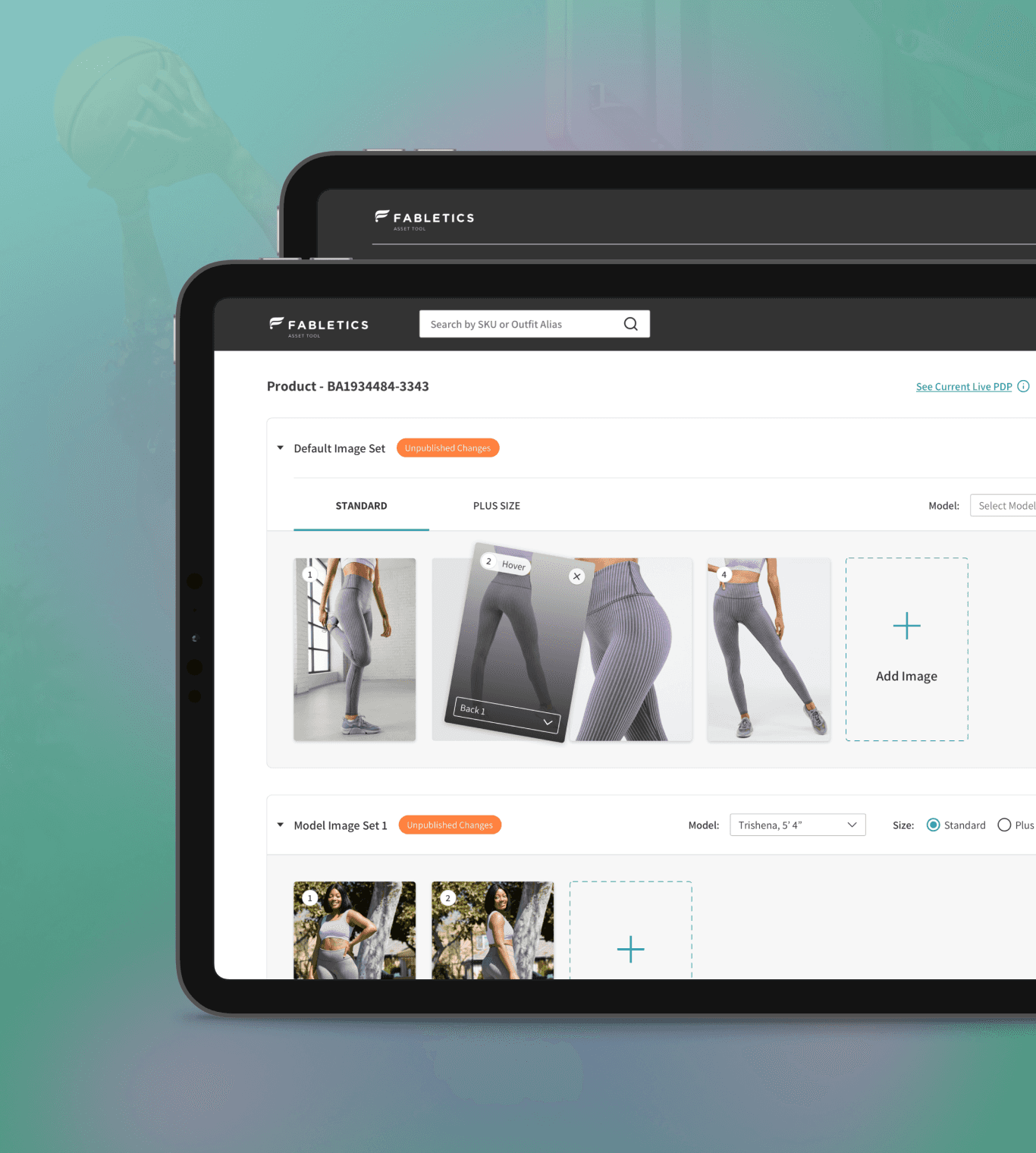
SAM (Site Asset Management) is the internal tool behind the e-commerce sites of TechStyle Fashion Group's brands. It gives their teams one place to name, organize, preview, and publish the product images that appear on product pages across multiple brand websites and countries — replacing a tangle of disconnected tools.
TechStyle wanted to fix a slow, error-prone asset-publishing process. As part of the Whitespectre team, I led the UX/UI design of the tool that replaced it — turning a fragmented, multi-tool workflow into a single streamlined system that boosted the team's productivity and cut publishing time dramatically.
challenge.
Objectives:
Replace a fragmented, multi-tool process with one source of truth
Cut the time and manual work of publishing product images to PDPs
Reduce cross-team friction and human error across Marketing, Merchandising, and Creative
Drive adoption with a tool teams actually want to use
Constraints:
An entrenched toolset (AEM + ~7 tools), with workflows built around its limits
Multiple teams, each with different needs and existing dependencies
International publishing — product availability varied by country
Had to fit TechStyle's existing tech ecosystem without losing or conflicting with existing data
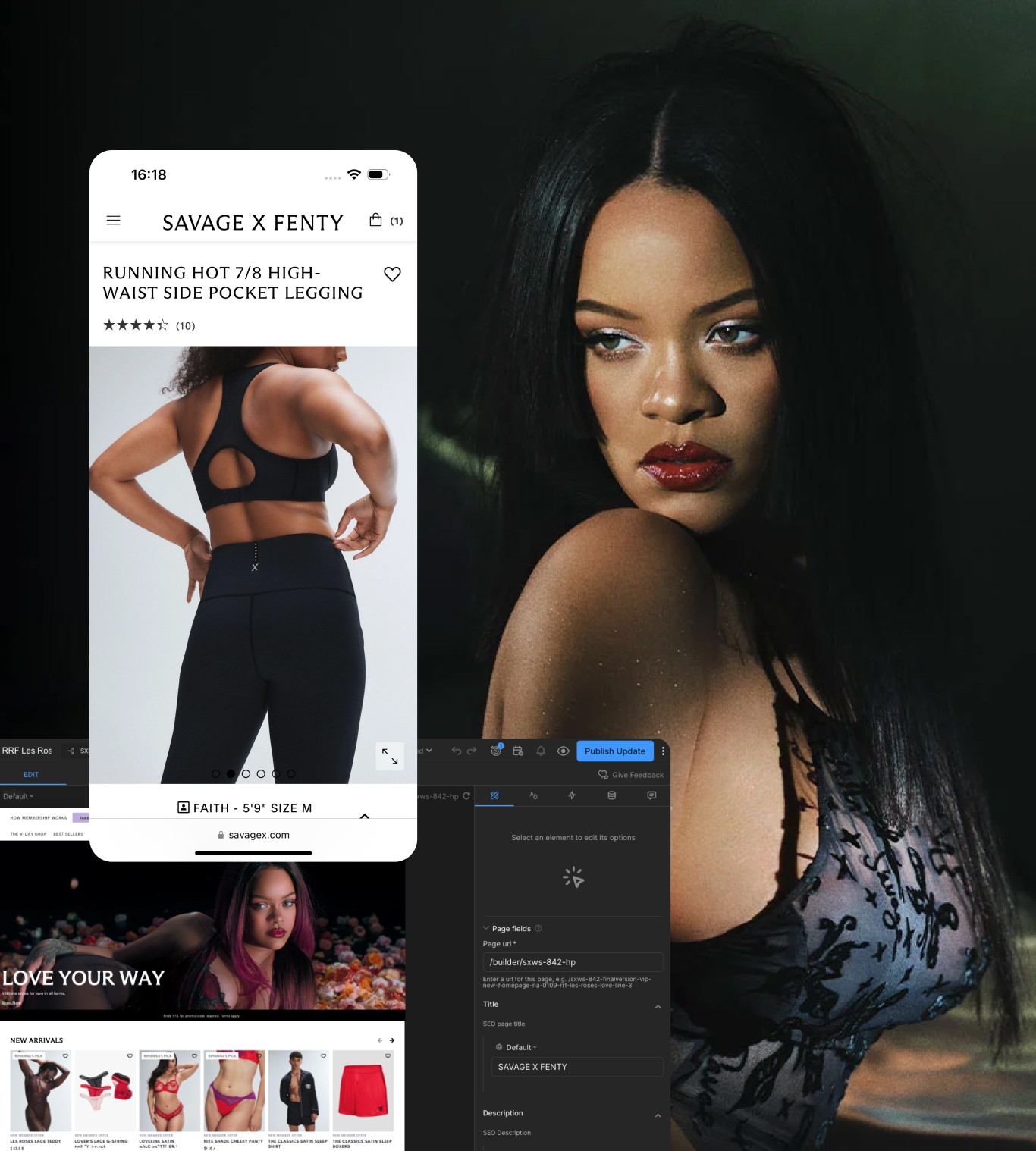
TechStyle Fashion Group is the global incubator behind brands like Fabletics, Savage X Fenty, JustFab, and Yitty, powered by its own end-to-end e-commerce platform. But one part hadn't kept up: managing and publishing the constant stream of product and lifestyle photography.
As the business grew, that work had sprawled across many teams and even more tools — Adobe Experience Manager plus roughly seven others. The Marketing, Site Merchandising, and Creative teams constantly conflicted and miscommunicated, creating workflow friction, repetitive manual work, cross-team dependencies, and a high risk of error. My task was to chart a clear path out: interpret their tangled needs into a smarter process and a single tool that let them publish to customers with speed and confidence.
approach.
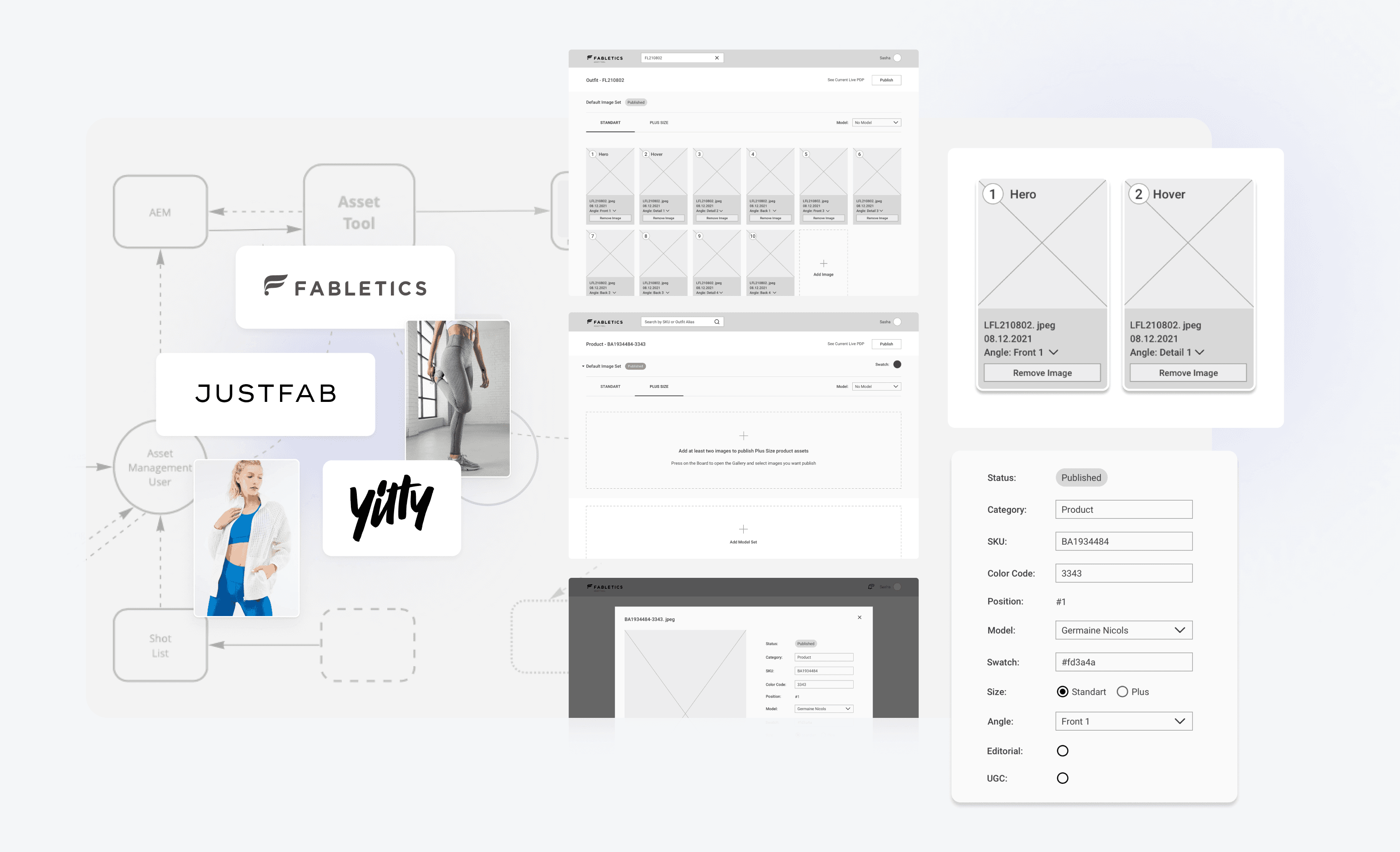
I worked closely with TechStyle to deconstruct their user and business needs before proposing anything. Through multiple iterations, conversations with each group of stakeholders, and an audit of every tool in use, the real problem came into focus: this wasn't a missing feature, it was a fragmented process — driven by product limitations, band-aid fixes, and dependencies between the Marketing, Site Merchandising, and Creative teams. From there I defined the essential functionality and a plan to collapse the whole workflow into one simple tool.
key decision 1/3.
Consolidation & Simplification
The most important decision was what not to build. We were asked for one more tool; the real fix was replacing eight with one.
We were initially asked to build one more tool to patch a gap in the process. A rigorous deep dive showed that would only add to the problem. TechStyle's asset toolset — Adobe Experience Manager plus around seven other tools — was the friction: high manual effort, cross-team dependencies, and constant room for error, all adding up to poor adoption and low ROI.
So instead of building another tool, I made the case for a different approach: consolidate the entire workflow into a single, automated, one-stop asset-management and publishing tool — one source of truth. Working with engineering, we built it on technologies already used across the TechStyle ecosystem, so it slotted in without losing or conflicting with existing data.


key decision 2/3.
A Workflow Built Around Roles
The old process forced every team through different tools to do their part — uploading, selecting, naming, grouping, publishing per country, editing, re-uploading — losing context at every handoff. I designed a single flow that mirrors how the teams actually work: the photographer uploads a set of model images to the library; the asset manager reviews and adds the right ones to the product page; the editor names them, orders and groups them by model or size, and publishes. From there, each set publishes to every country's site automatically, based on what's available in that market.
key decision 3/3.
Breaking the File-Name Dependency
One invisible thing — a file name doing the job of a database — was behind most of the pain. Removing it is what made everything else simple.
The biggest hidden constraint was the file name. It was the single identifier for an asset's type, group, model, and order — so changing or reordering even one image meant redoing the whole thing from scratch: renaming files by hand, passing them through multiple tools, and re-uploading everything before it could publish.
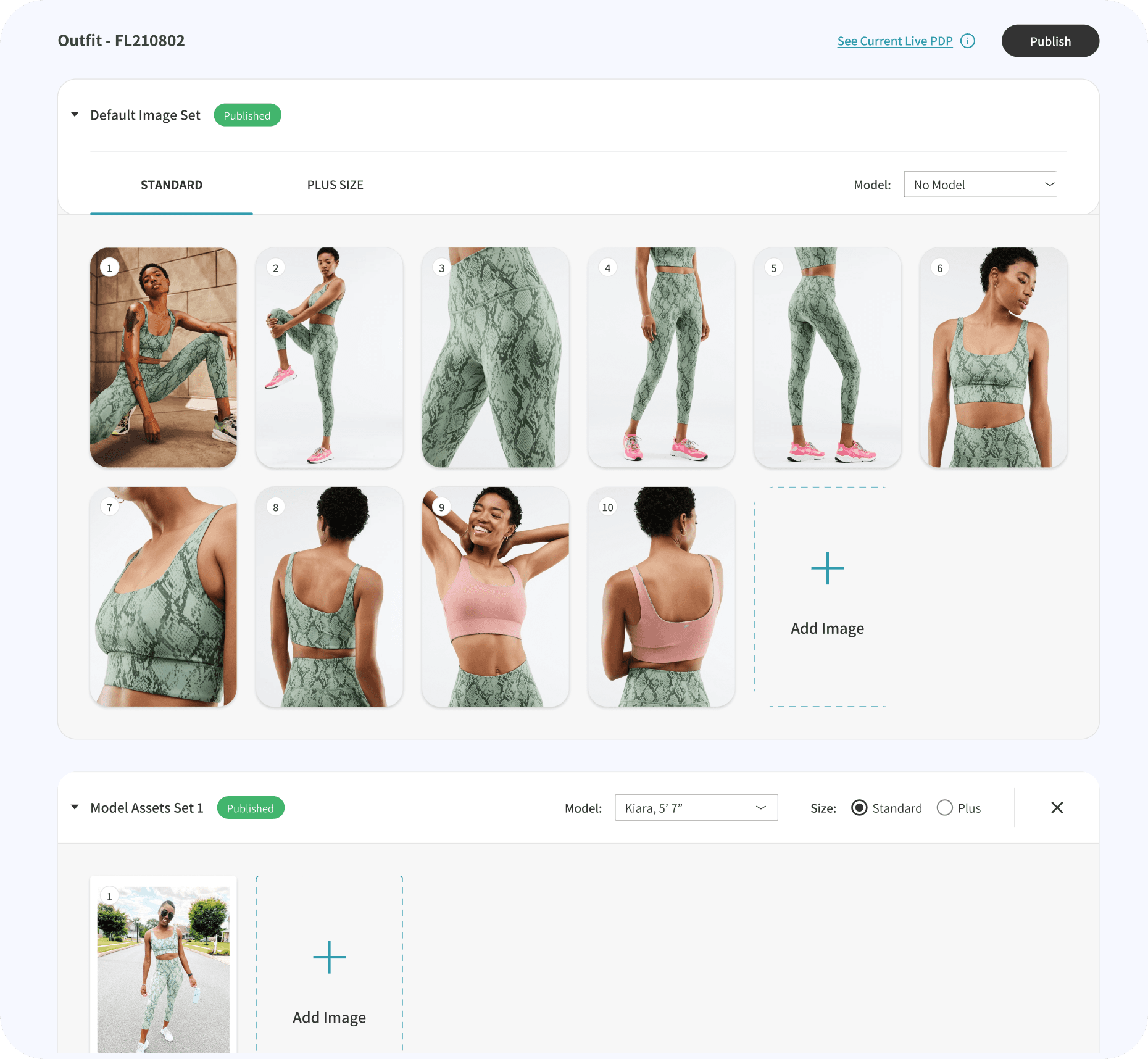
I removed that dependency entirely. In the new tool, teams open the existing product page and edit in place — drag images to reorder, swap or add new ones, add model sets — then save and publish in a single click, with the backend handling the logic underneath. It's the change that turned hours of back-and-forth into a five-minute task.

result.
Result & Impact
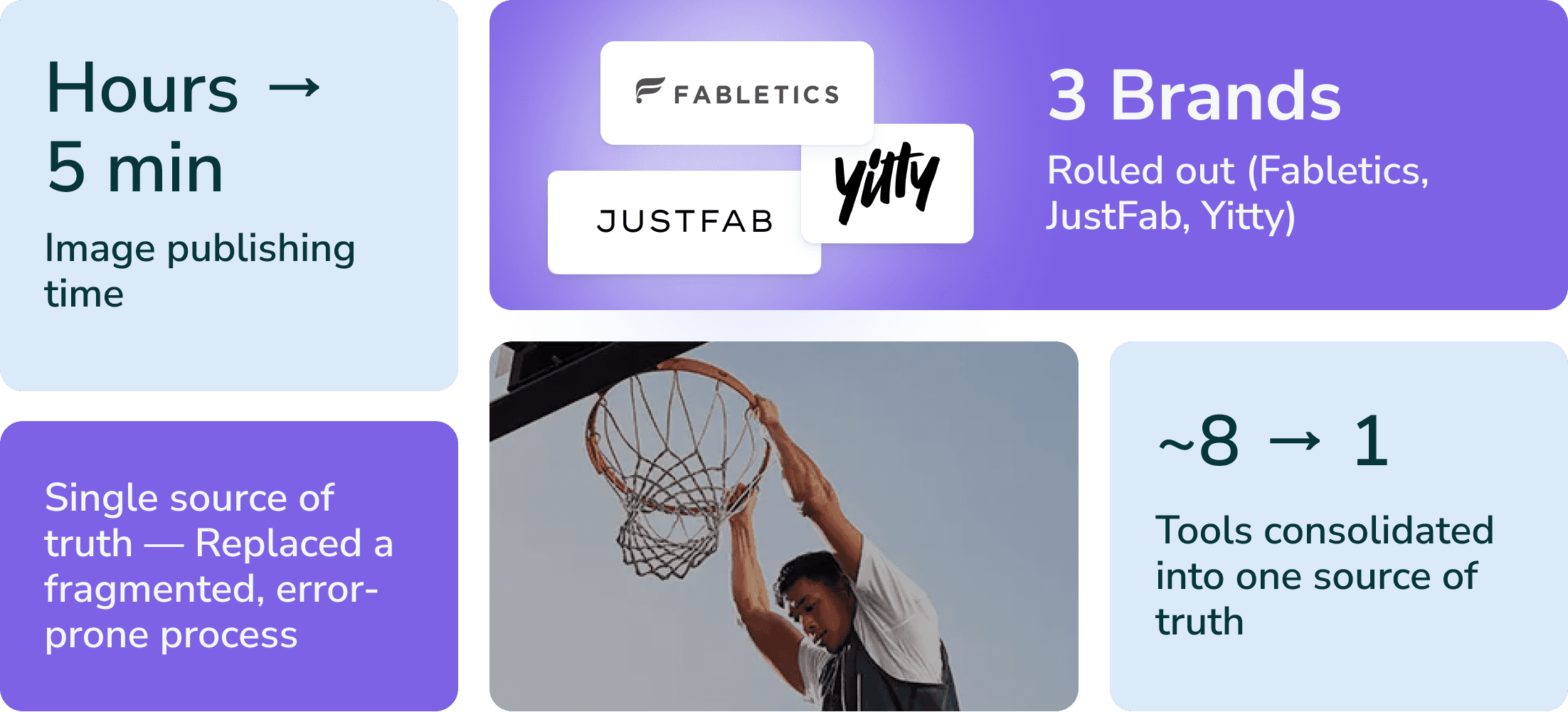
Consolidating the workflow into SAM delivered immediate, measurable gains. Publishing a product's images — once a multi-tool process that took hours of back-and-forth between teams — became a five-minute task in a single tool. Manual and duplicate work, cross-team dependencies, and human error all dropped sharply, and tech-investment ROI improved.
To date, SAM has rolled out across three TechStyle brands — Fabletics, JustFab, and Yitty — with seamless adoption, positive feedback, and continuous refinement.
Testimonial.
With Whitespectre, we found a thought partner on a leadership level that has the product and technical chops of senior and principal engineers and designers to deliver architecture and solutions that are lightyears ahead of others. Their level of structure, collaboration, and open communication is something you don’t typically see, but absolutely need to drive results.

Tim Collins
CTO, Techstyle & Fabletics