INDUSTRY:
E-COMMERCE / HOME GOODS
CLIENT:
RUGGABLE
ROLE:
LEAD PRODUCT DESIGNER
FOCUS:
UX RESEARCH,
ENTERPRISE & INTERNAL TOOLS,
MOBILE-FIRST UI,
DESIGN SYSTEMS,
WORKFLOW DESIGN
Smart Tools to Power Ruggable's Warehouse Operations
about.
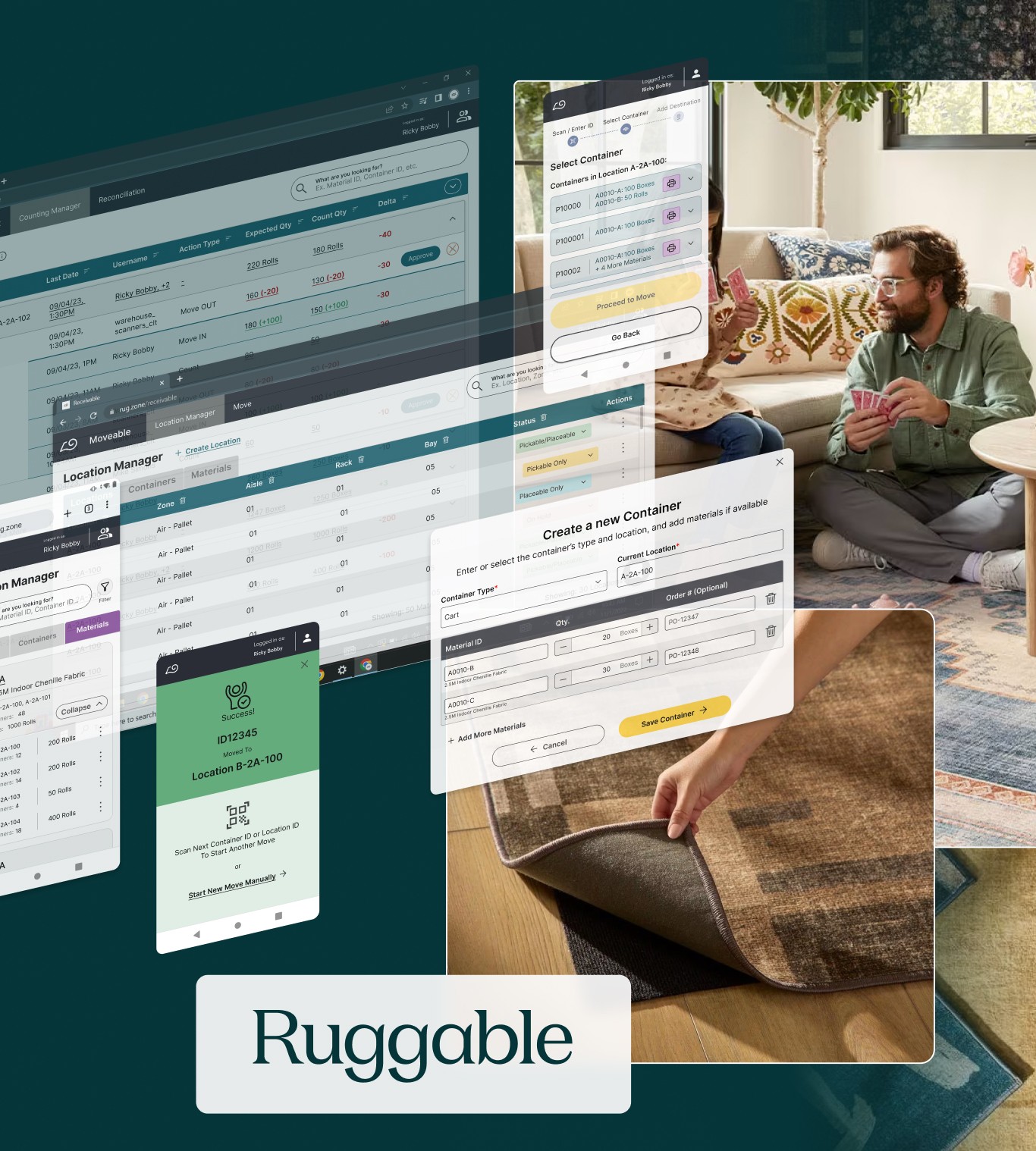
Ruggable is a fast-growing e-commerce brand offering washable, made-to-order rugs shipped directly to customers across the US. To power their warehouse operations at scale, the Whitespectre team designed and built a custom internal Warehouse Management System — a fully digital, end-to-end tool that unified inventory tracking, material movement, and cycle counting across their global fulfillment network.
As the sole product designer on the team, I led the design of Ruggable's WMS end-to-end — from initial research and workflow mapping through interaction design, the design system, and implementation review. I owned the full design cycle across all three modules, and helped establish the team processes that made the work shippable.
challenge.
Objectives:
Digitize and unify the full warehouse inventory lifecycle
Eliminate manual translation between paper and digital, and reduce discrepancies
Deliver a fast, reliable mobile tool built for real warehouse conditions
Give managers real-time inventory visibility across locations
Constraints:
No existing digital workflow — processes varied by location and by person
Small mobile screens, used in a physically demanding environment
An English interface for a predominantly Spanish-speaking workforce
Incomplete design system; the first module had already shipped without one
Ruggable's made-to-order model means every rug is manufactured on demand — a high-volume operation running across multiple warehouses. As the business scaled, the gap between that operational complexity and their internal tooling became impossible to ignore.
Warehouse teams were managing receiving, material movement, and cycle counting through a mix of paper lists, handwritten notes, and verbal task assignments. Excel sheets served as the only digital layer — a way to move information off paper, but one that added its own translation errors. Operators already had phones and barcode scanners, but no digital system to make use of them: scanners identified materials and batches, while the actual tracking and counting still happened on paper.
With order volumes growing and operations expanding internationally, Ruggable needed a single, unified digital system that could handle the entire inventory lifecycle, reduce errors, and give both operators and managers the confidence to act on accurate, real-time data.
approach.
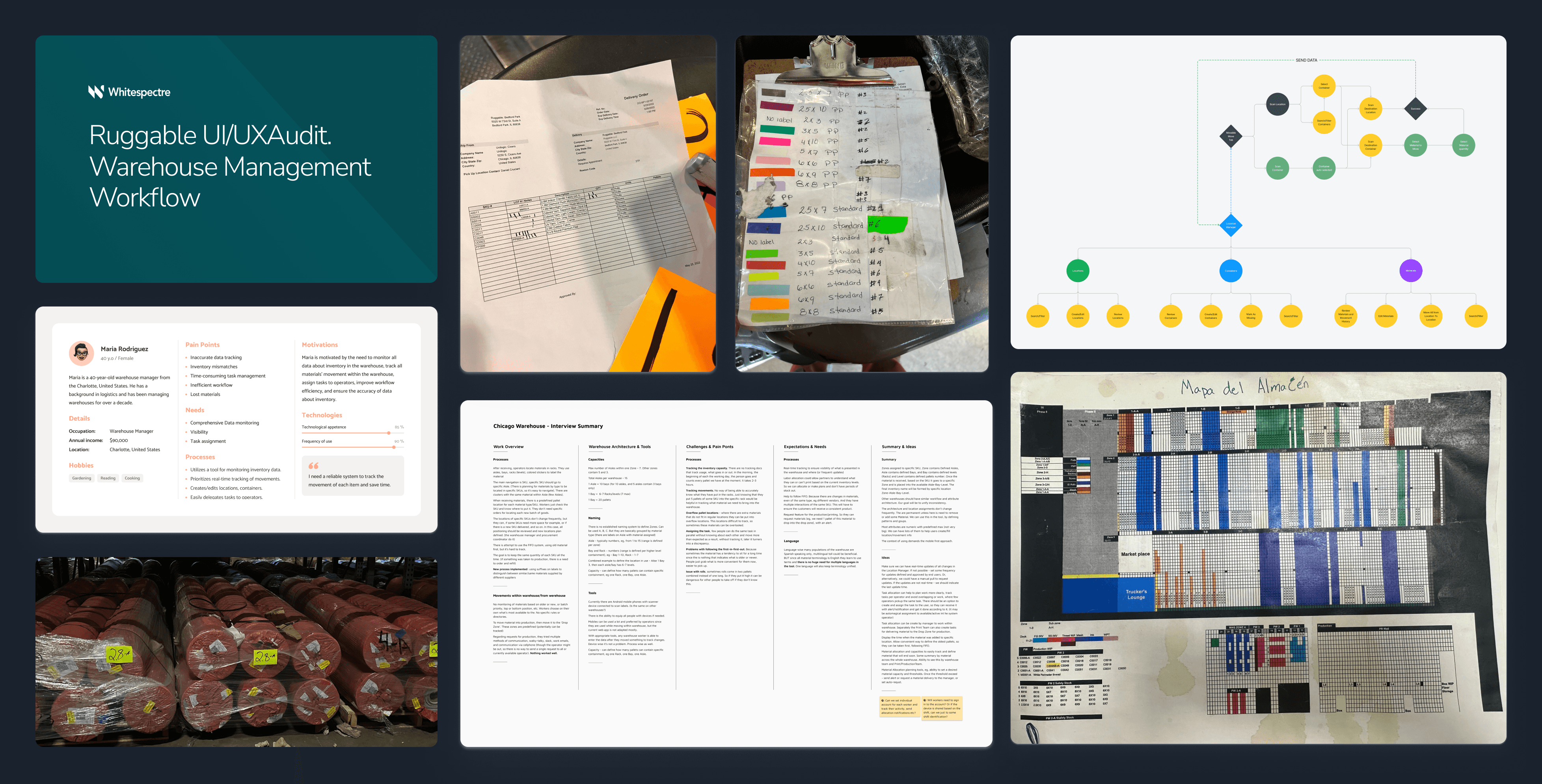
Methods: Structured operator & manager interviews · Workflow mapping · Personas & pain-point prioritization · Architecture reviews
I started by getting inside the operation. Before any design work, I ran structured interviews with warehouse managers and operators across locations — mapping how work actually moved through the space, where decisions were made, and where things broke down.
That research revealed the real shape of the problem: it wasn't just missing software, it was missing structure. Workflows differed by location and by person, and any tool that ignored how operators already thought about the space — the Zone → Aisle → Bay → Load hierarchy they'd internalized — would create more friction than it removed.
From there I built workflow narratives, personas, and a prioritized map of genuine pain points — separating what users actually needed from a wishlist of nice-to-haves. That shaped both the product strategy and the sequence we built in.
key decision 1/4.
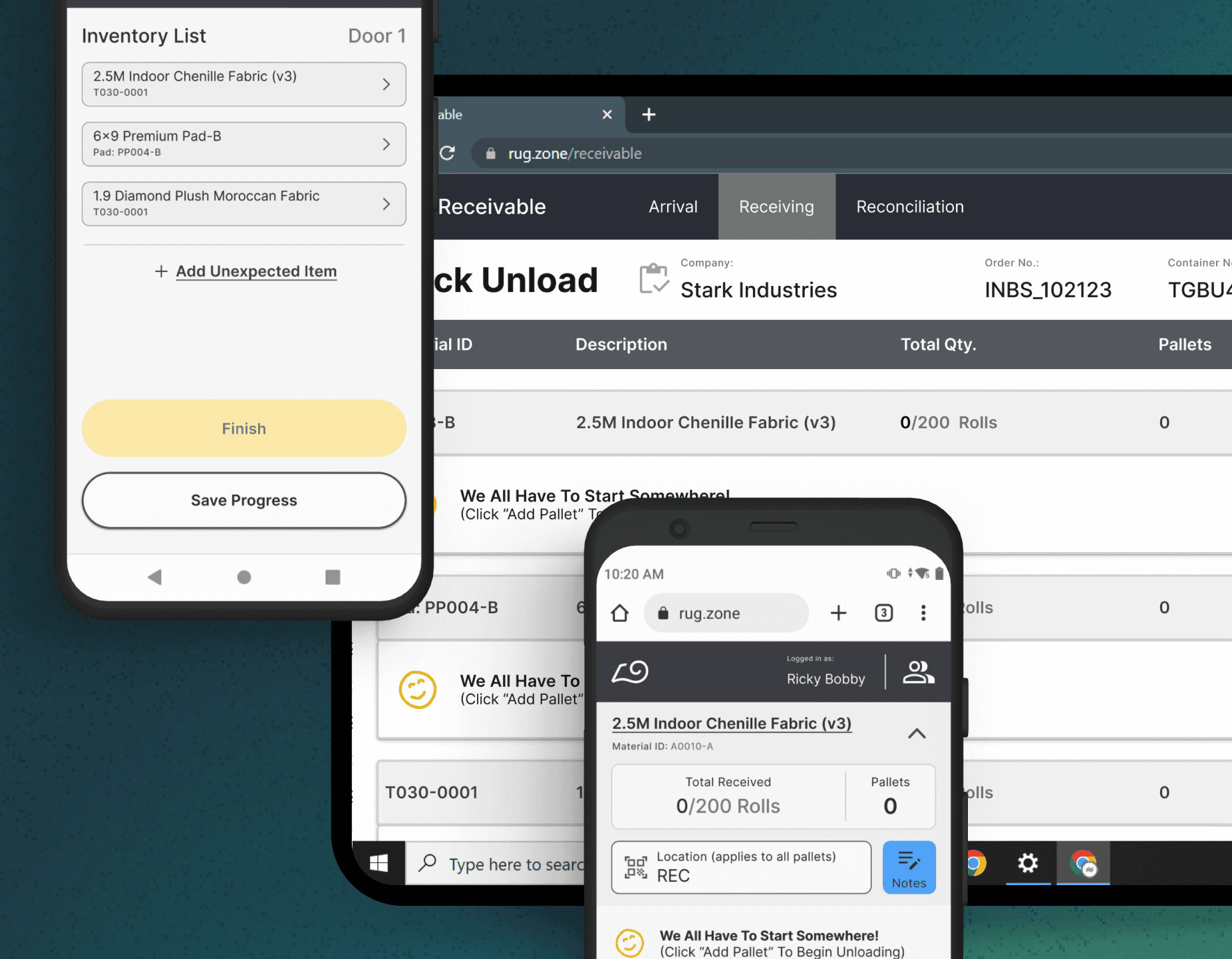
Receivable
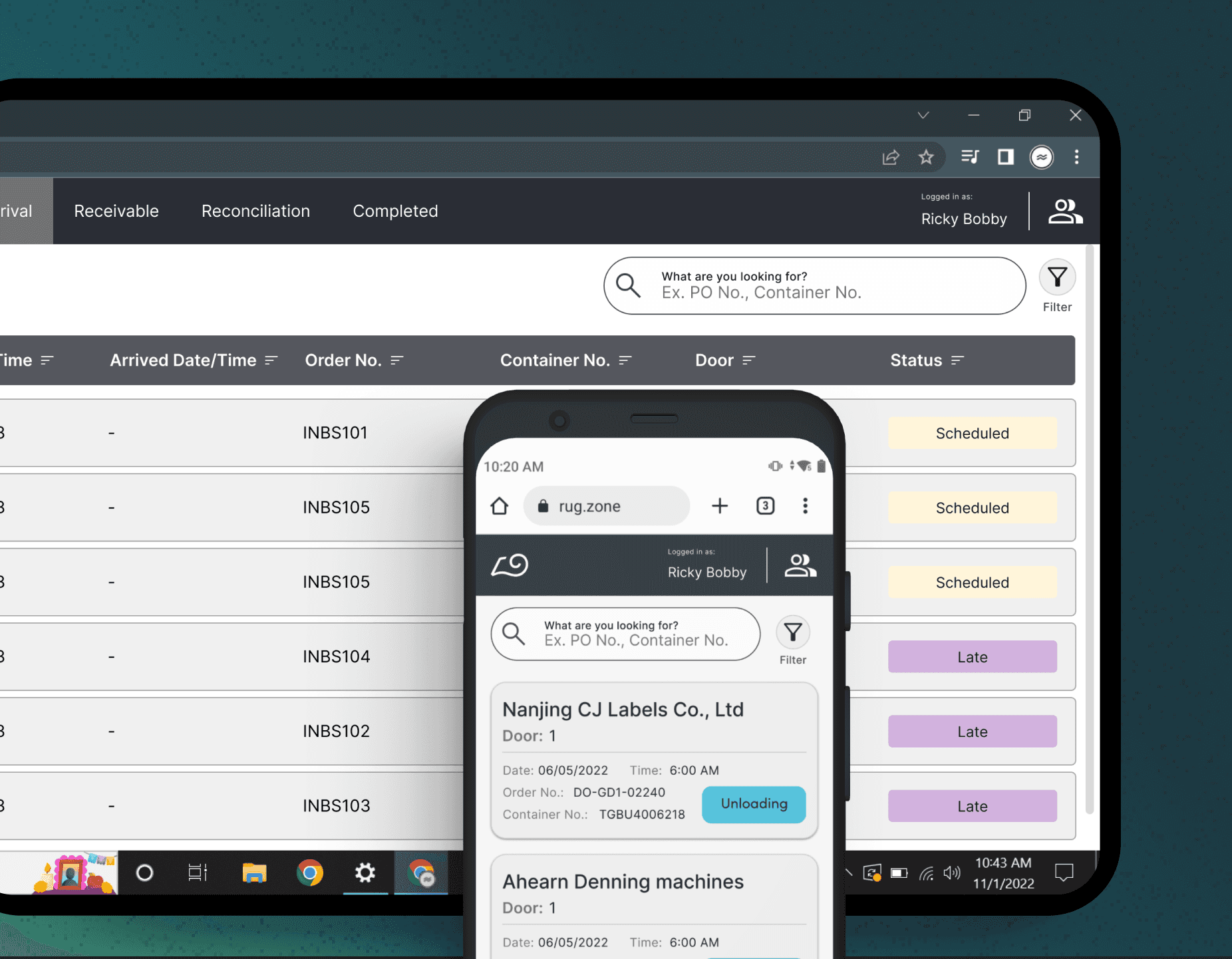
The design challenge was keeping this flow fast and error-resistant for operators working under time pressure in noisy conditions. Every screen was built around the minimum information needed at that step — nothing more. Status visibility, clear error states, and confirmation gates at critical points made sure nothing slipped through uncaught at the source.
Every warehouse operation starts with what comes in. Before Receivable, incoming shipments were tracked manually — operators cross-referencing paper delivery notes against expected orders, recording quantities by hand, and flagging mismatches verbally to managers. There was no single source of truth, and by the time a receiving error surfaced, the materials had usually already moved deeper into the warehouse.
Receivable digitized the entire intake process — from the moment a truck arrives to the point materials are confirmed, placed, and reconciled. Operators work through a structured flow: materials are received container by container, quantities are checked in real time, and any discrepancy between expected and actual flows into a reconciliation step before anything moves further. Managers get a live view of incoming shipments across every location without leaving their desk.
key decision 2/4.
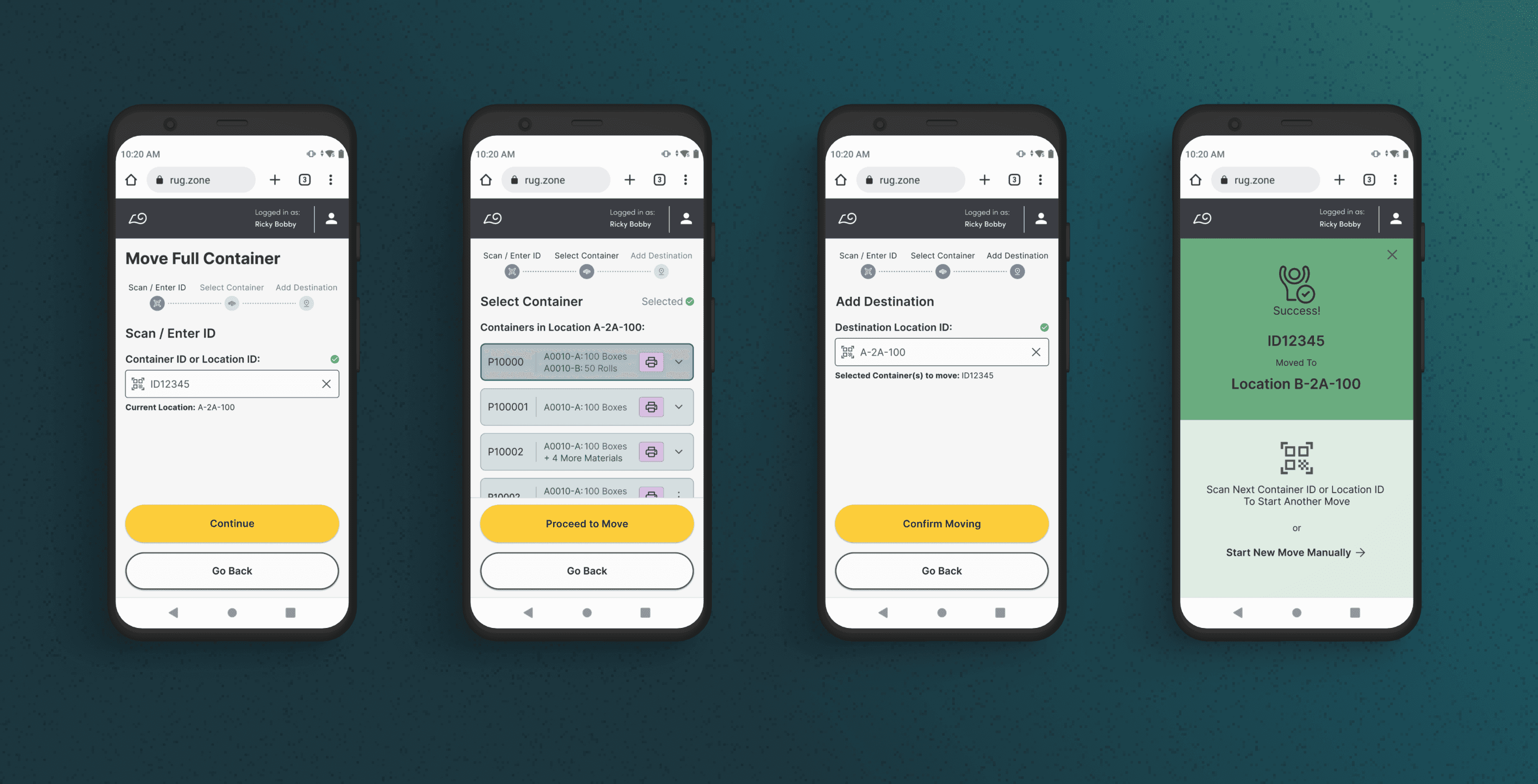
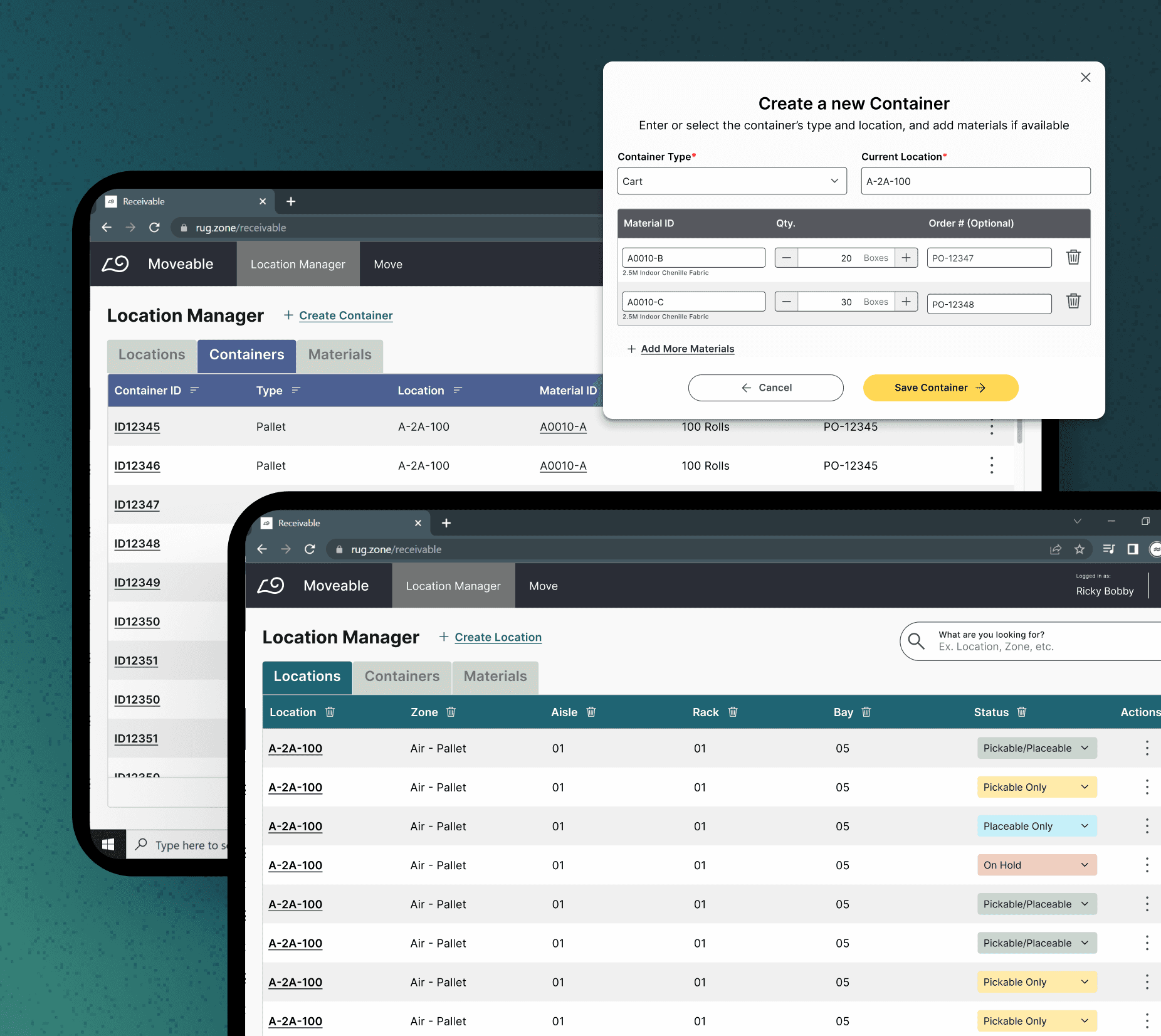
Movable
The key decision was ruthless flow simplification. A material move is a repeated action — an operator might complete dozens in a shift, so every unnecessary step or piece of visual noise compounds across a team of thirty. I mapped the most common paths and reduced them to the minimum viable interaction, surfacing extra options only for the cases that genuinely needed them. Movable was also where the revised team process first proved itself — it launched cleanly, and the feedback that came back was about what to add next, not what was broken.
Once materials are received, they move — constantly, across a large physical space. That movement used to rely on verbal instruction, handwritten task sheets, and mental maps that lived only in the heads of experienced operators. New staff had no reliable way to know where things were or where they needed to go, and managers had no visibility into work in progress.
Movable gave operators a simple tool to execute and record every movement in a few taps — scan a container, select a destination, confirm the quantity. Behind the scenes, each movement updated a central inventory database and gave managers a clear, real-time picture of where every material was at any moment. Assignment flows let managers queue tasks and monitor progress without being on the floor.

key decision 3/4.
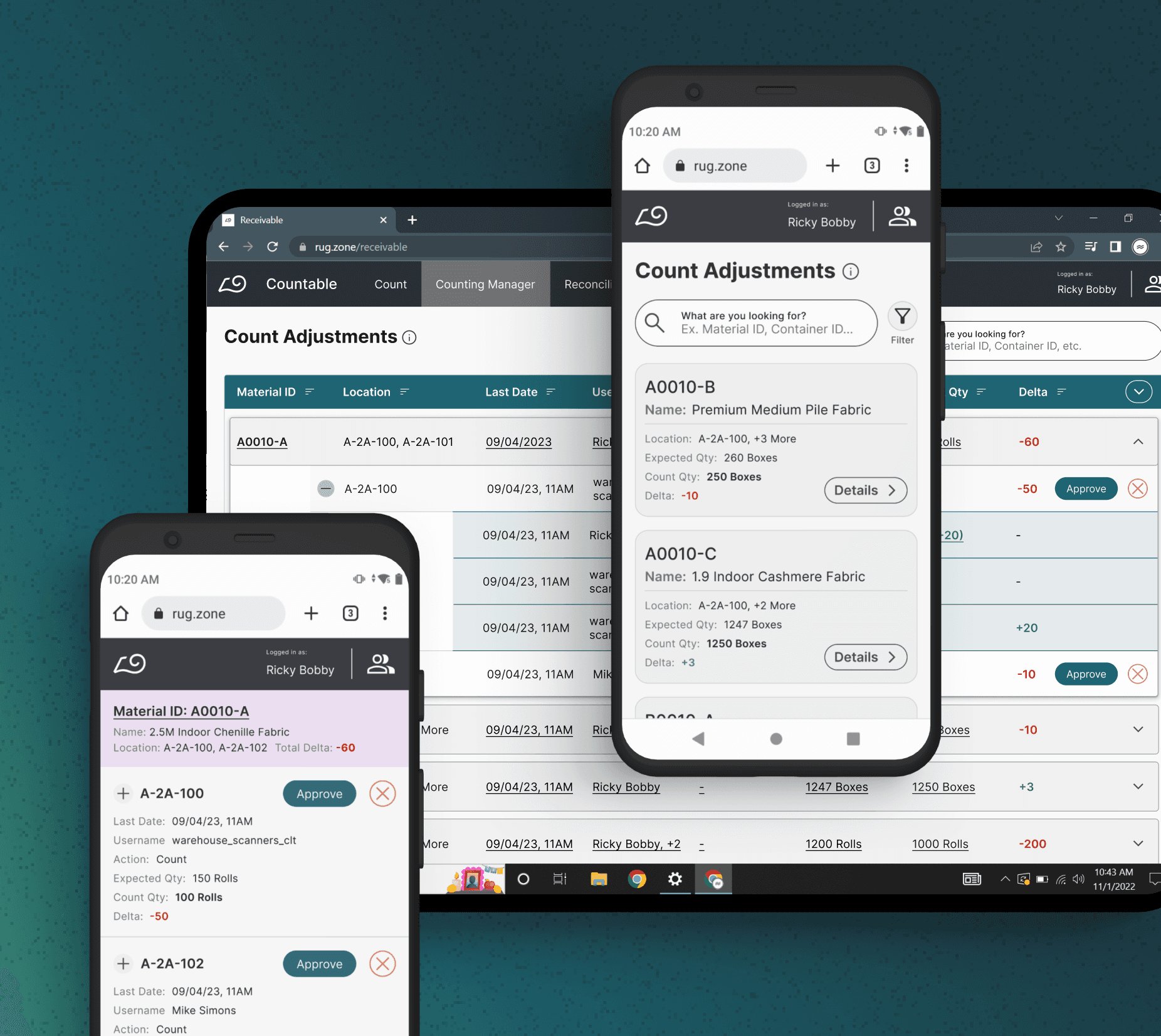
Countable
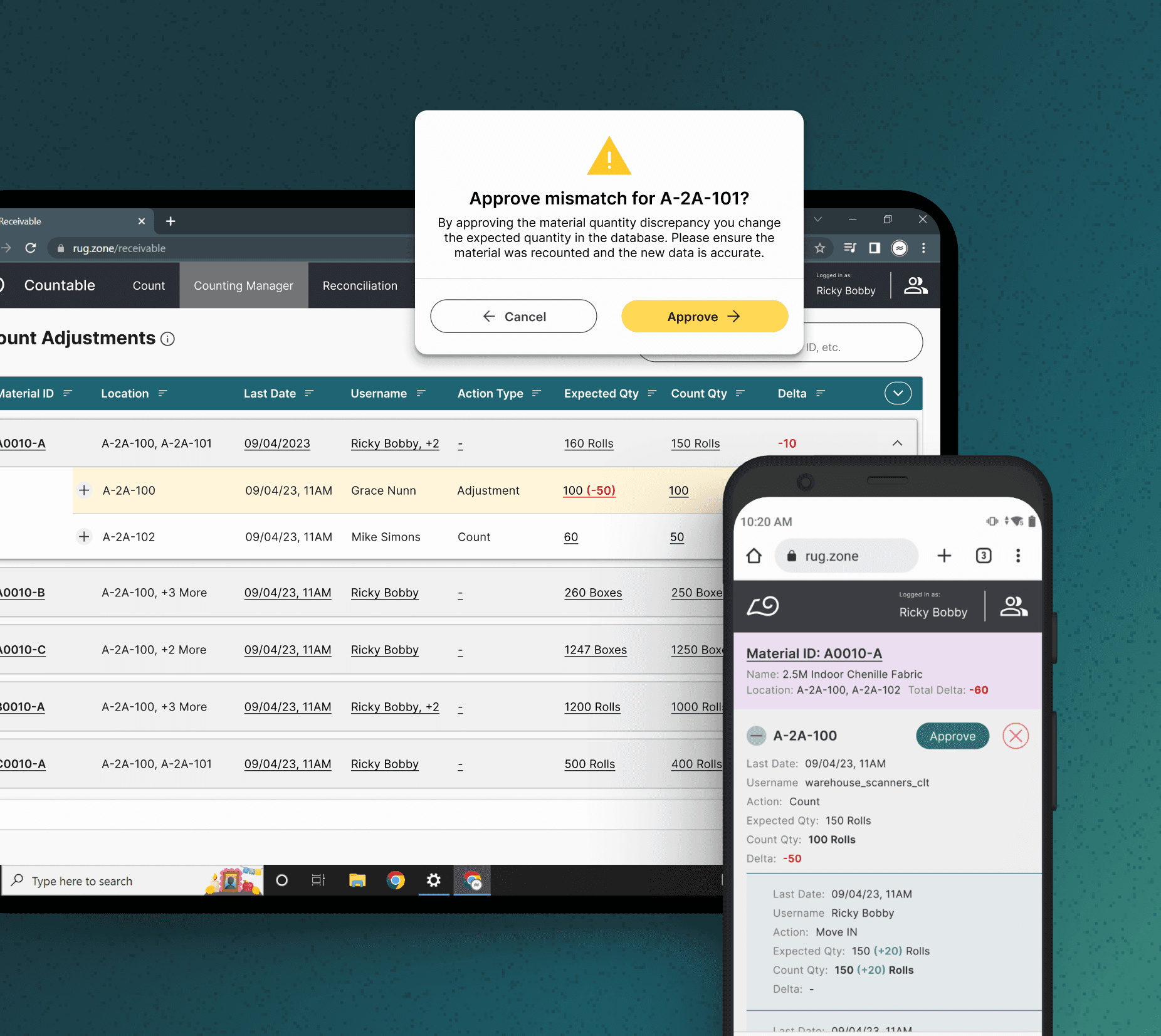
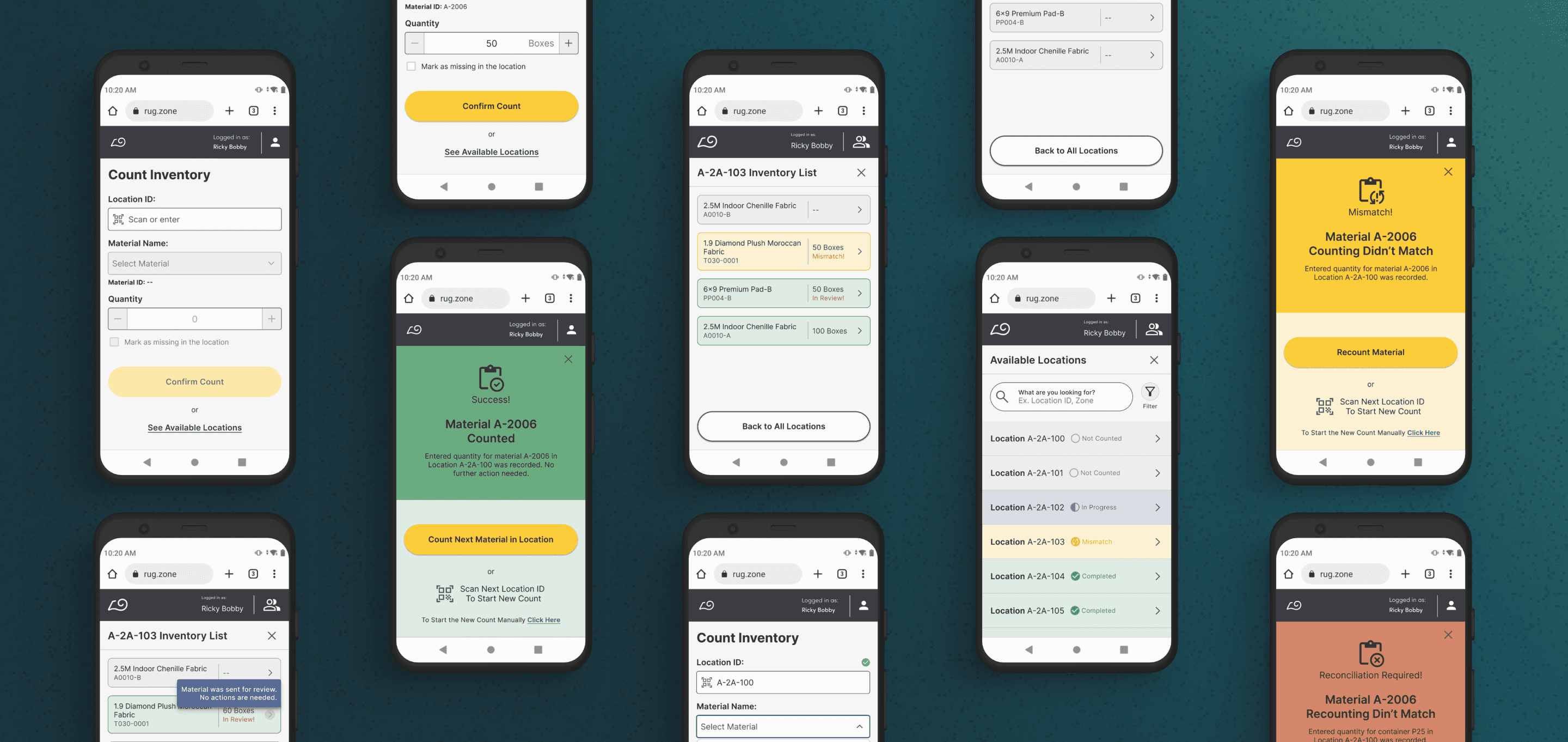
Designing Countable meant thinking about how counting actually happens in a warehouse — it's non-linear, gets interrupted, and moves between locations. The flow had to be resumable at any point, forgiving of interruptions, and always clear about what had been counted and what hadn't. Real-time mismatch flagging was the feature that changed the process most: it turned reconciliation from a painful post-count exercise into something that happened continuously, in context, while the operator still had eyes on the physical material.
Inventory accuracy over time depends on cycle counting — regularly auditing what's actually on the shelves against what the system says should be there. At Ruggable this was entirely manual: counts started from printed sheets, quantities were recorded by hand, and managers spent hours reconciling results after the fact. Discrepancies were common, resolution was slow, and the data was only as reliable as the paper it was written on.
Countable replaced that process end to end. Managers create and assign count sessions directly in the system, specifying locations and materials. Operators scan locations and enter quantities, and the system immediately compares recorded against expected — flagging mismatches in real time rather than hours later. Where there's a discrepancy, the operator can recount on the spot or escalate for reconciliation, with everything tracked and attributed. Managers see session progress live and get a full reconciliation summary the moment a count closes.
key decision 4/4.
Process & System Thinking
The real deliverable wasn't screens — it was a system and a process the team could keep building on as we moved from module to module.
System & Component Architecture:
The existing design foundation was incomplete — components inconsistent, reuse minimal. I rebuilt it as a proper system: clear in its logic, consistent across all three modules, with every component defined down to its states and edge cases rather than left for interpretation at the development stage.
Context & Constraints:
Operators work on mobile — small screens, in motion, in noisy conditions. Managers work on desktop. The same system had to serve both without compromise. And with a predominantly Spanish-speaking workforce on an English interface, every decision leaned toward visual communication over text dependency.
Process & Team Workflow:
Making this work meant stepping into a project-management role. Cleaner acceptance criteria, design review in sprint grooming, and design sign-off in PR — these were the conditions that made the difference between the troubled Receivable launch and the clean Movable one.

results.
From Paper to a Fully Unified Operation
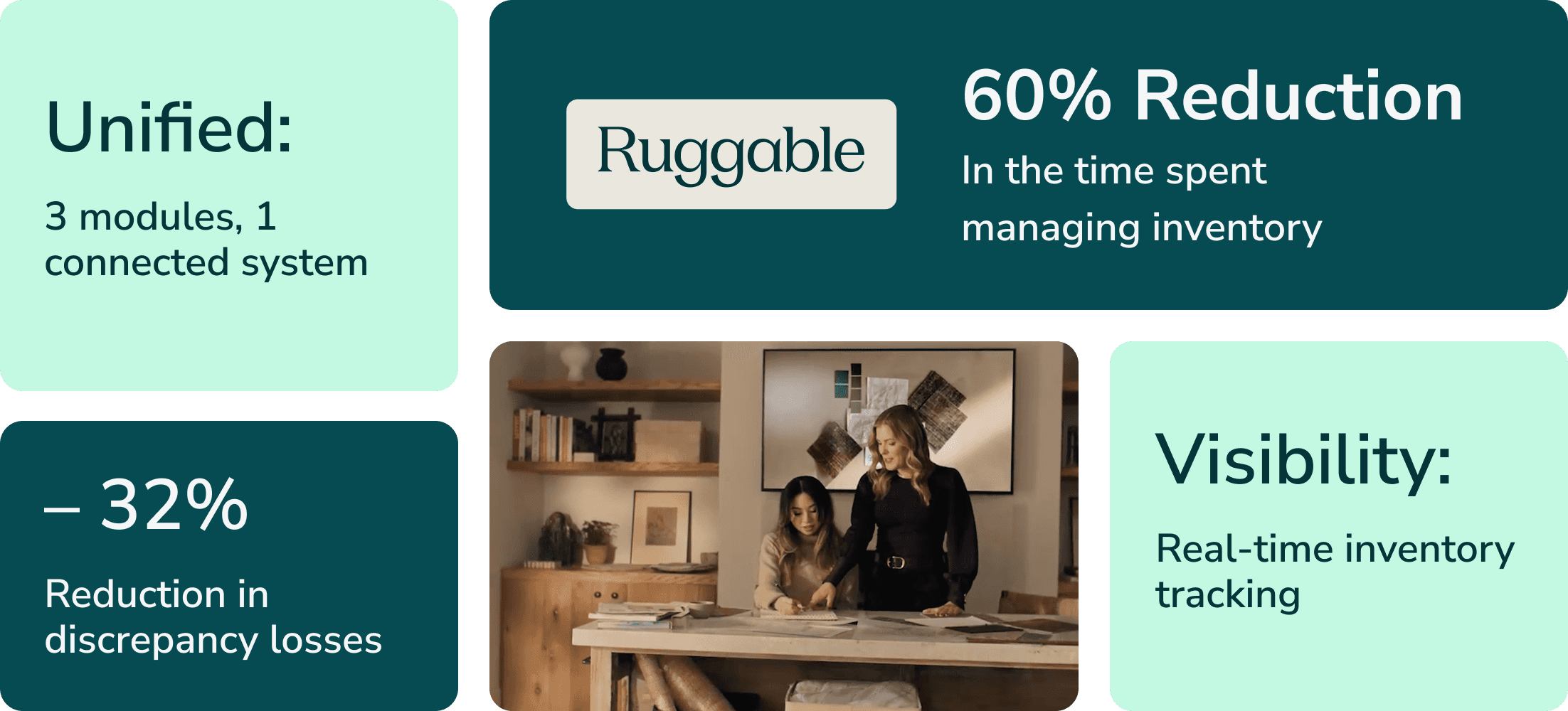
60% — Reduction in time spent managing inventory
−32% — Reduction in discrepancy losses
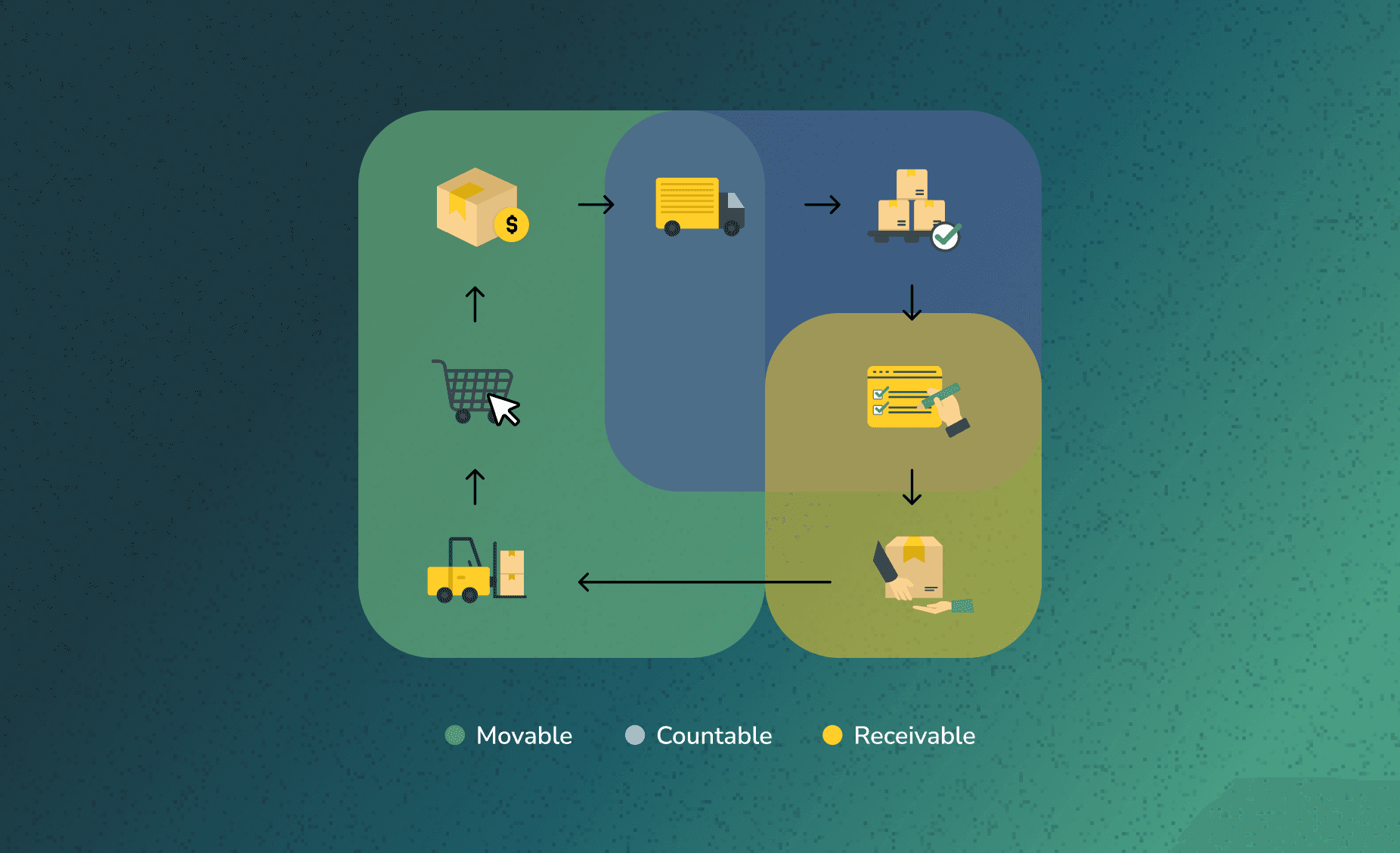
3 → 1 — Three modules unified into one connected system
Real-time — Live inventory visibility across locations
The shift from a fragmented, manual operation to a unified digital system had immediate, measurable impact across Ruggable's warehouse workflow — replacing paper-based processes with a single connected tool covering the full inventory lifecycle.
Inventory management time dropped by 60%. Tasks that used to mean cross-referencing paper lists, updating Excel files, and confirming details verbally were compressed into one connected flow — less time managing information, more time on actual warehouse work.
Discrepancy-related losses fell by 32%. Real-time mismatch flagging during cycle counting — catching gaps at the point of counting rather than hours later — fundamentally changed how errors were handled. Finding a problem while the operator still has eyes on the material is a different situation entirely from finding it the next day.
The clean Movable launch validated the process changes made alongside the product work: no critical issues, positive operator feedback, and a foundation now supporting millions of orders a year across Ruggable's global fulfillment operations.
With structured, reliable data now flowing through every stage of the operation, the WMS also laid the groundwork for what's next: a foundation ready to support forecasting, automation, and AI-driven planning.
testimonial.
Work on our internal tooling has been foundational for us. It has significantly strengthened our confidence in inventory management, allowing us to streamline upstream, ordering, and manufacturing planning.

AJ Wood
Senior Director, Product Management