INDUSTRY:
IOT / CONSUMER HARDWARE
CLIENT:
SPOTON
ROLE:
LEAD PRODUCT DESIGNER
FOCUS:
UX/UI,
IOT & HARDWARE-SOFTWARE,
REAL-TIME DATA UX,
MOBILE-FIRST
CROSS-PLATFORM (REACT NATIVE)
Rebuilding a GPS Dog-Fence App from the Ground Up
about.
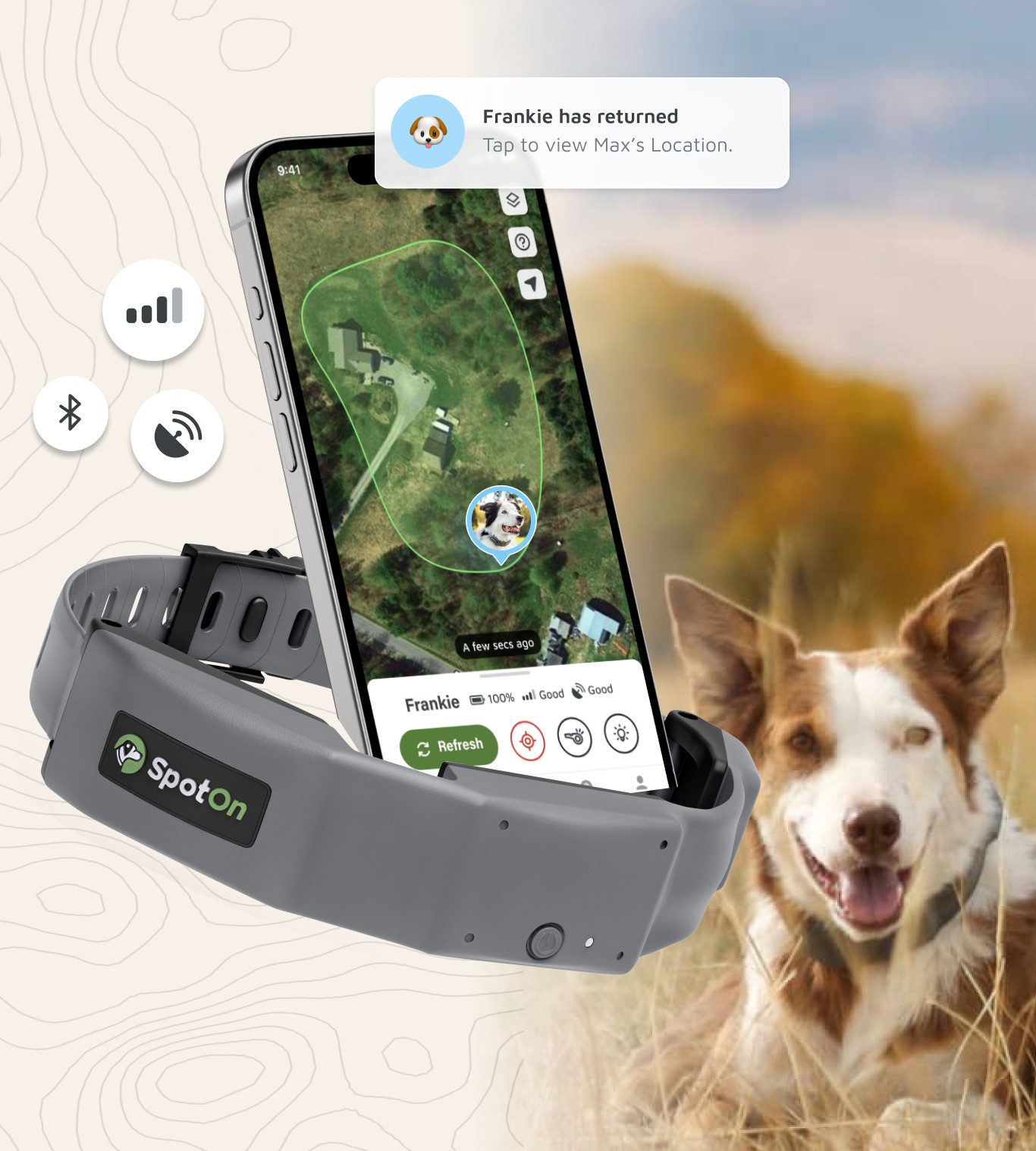
SpotOn is a GPS dog-fence system: a smart collar that lets owners create wireless boundaries over large properties with groundbreaking accuracy, paired with an app that handles everything else — configuring the collar, drawing virtual fences, training, live tracking, and alerts. The complex real-time technology stays hidden behind a simple, thoughtful experience.
As part of the Whitespectre team, I led product and UI/UX design for SpotOn's second-generation app — working at the edge of hardware and software to turn an advanced GPS platform into something any dog owner could use with confidence. I owned the experience end-to-end, from research and core flows through high-fidelity design and implementation, across both iOS and Android.
challenge.
Objectives:
Rebuild the Gen-2 app and backend from the ground up to fix Gen-1's weak UX
Hide military-grade complexity behind a simple, trustworthy experience
Make core tasks — fence creation, tracking — clear for a non-technical audience
Deliver one unified experience across iOS and Android (React Native)
Constraints:
The Gen-2 collar was being built in parallel — no real device to test against
A real-time system across GPS, cellular, and Bluetooth to hide behind simple UX
An audience unlike the tech's military origin — everyday, often older, dog owners
Connectivity unreliable by design: vast rural land, thick forest cover
SpotOn's virtual-fence technology came out of the military — extraordinarily precise, but built for experts. The challenge was to take that power and turn it into an intuitive, everyday experience for ordinary dog owners, choosing the essential capabilities and cutting away the rest.
Two things made it hard. First, the design started alongside hardware development — there was no finished collar to test against, so early decisions ran on research, assumptions, and emulator results. Second, the audience skewed older and less app-native, so every action had to stay clear no matter how complex the technology behind it.
approach.
The design goal was to develop a unified experience for a cross-platform development based on React Native, taking into account the specifics of each platform.
Our starting point was the Gen-1 collar and app — beloved for its precision, but weak enough in UX that the rebuild had to start from scratch. I gathered everything we could learn from the Gen-1 version: user feedback, expectations, and competitive research, then set the initial functionality and roadmap.
Because the software depended on hardware that was still being designed, we worked iteratively — building against an emulator that simulated the collar, testing with real dog owners, and treating every decision as reversible. With the right process, nothing was ever too expensive to change.
key decision 1/4.
Designing at the Edge of Hardware and Software
In a connected-hardware product, the hardware is only as good as the experience designed around it — product design is where raw capability becomes something a person actually trusts and uses.
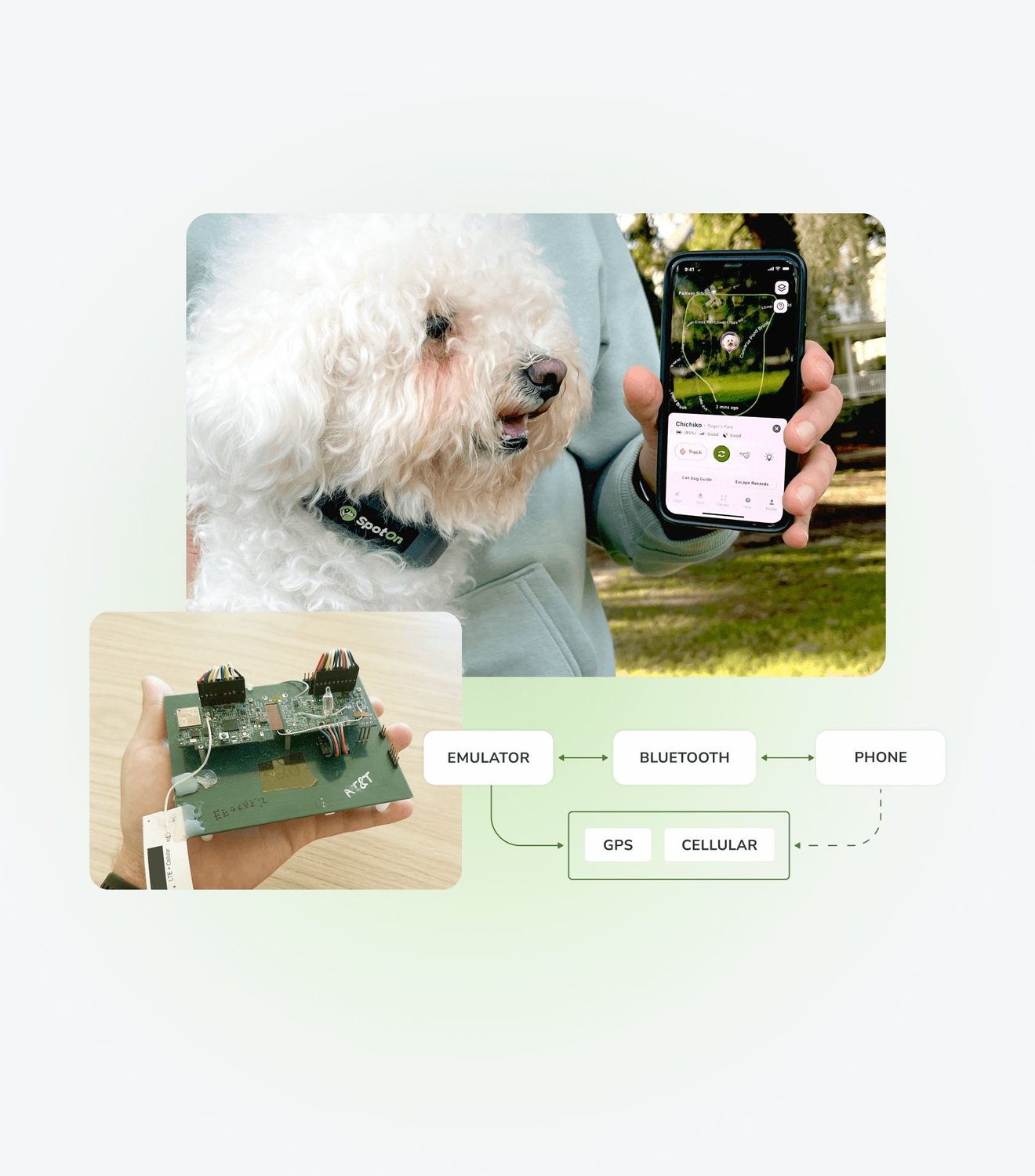
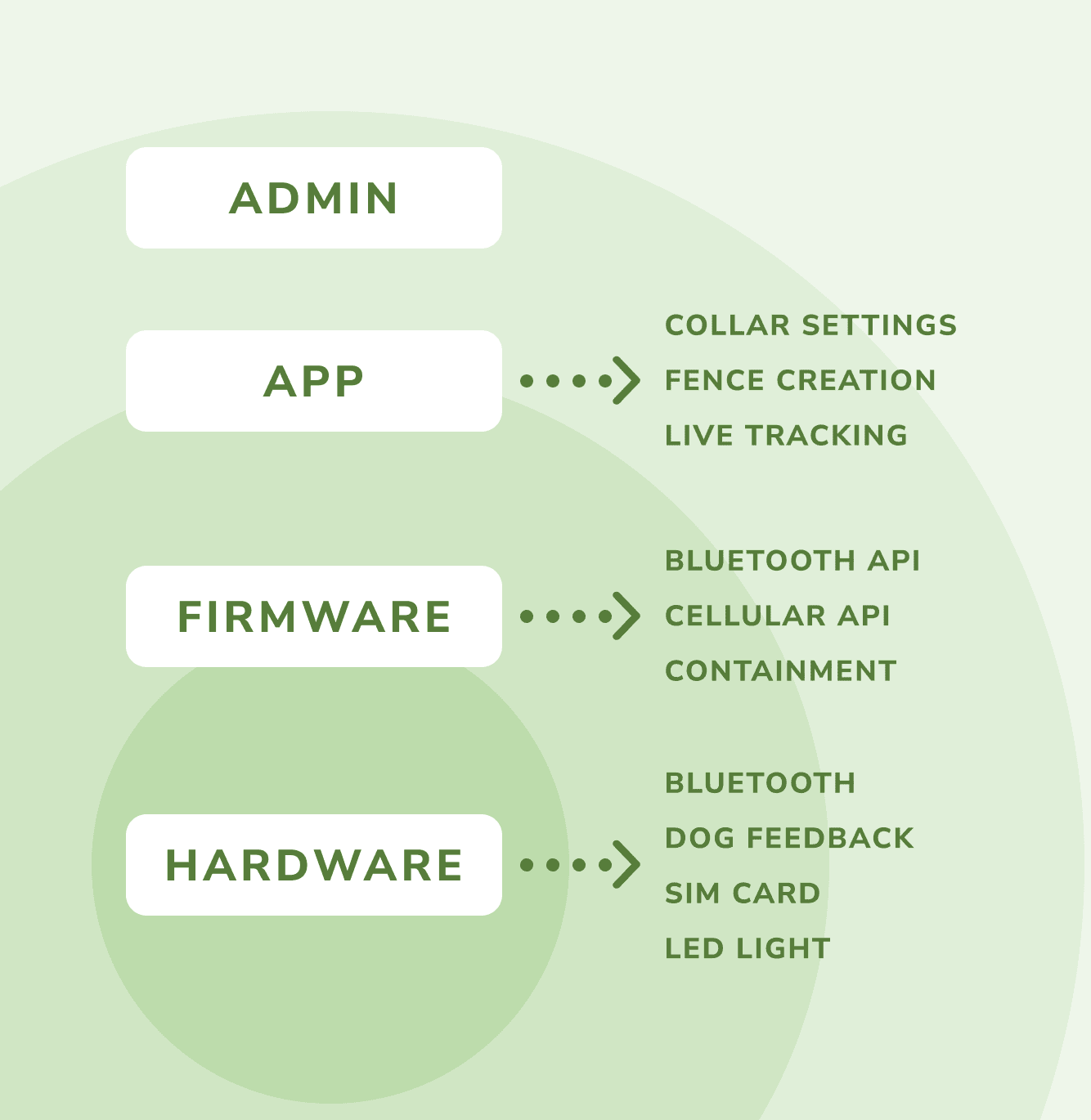
At its core, SpotOn is two parts working as one: the collar pinpoints the dog's location with military-grade GPS accuracy and relays it over cellular and Bluetooth, and the app reads that data so the owner can draw fences, train the dog, watch its location on a map, and get alerts — turning raw signal into everyday control.
There was a catch: when the rebuild began, the Gen-2 collar didn't exist yet — hardware and software were being built in parallel. So rather than wait, I designed against an emulator our team quickly built to simulate it, validating real-time flows like pairing and tracking with real dog owners and iterating as I went.
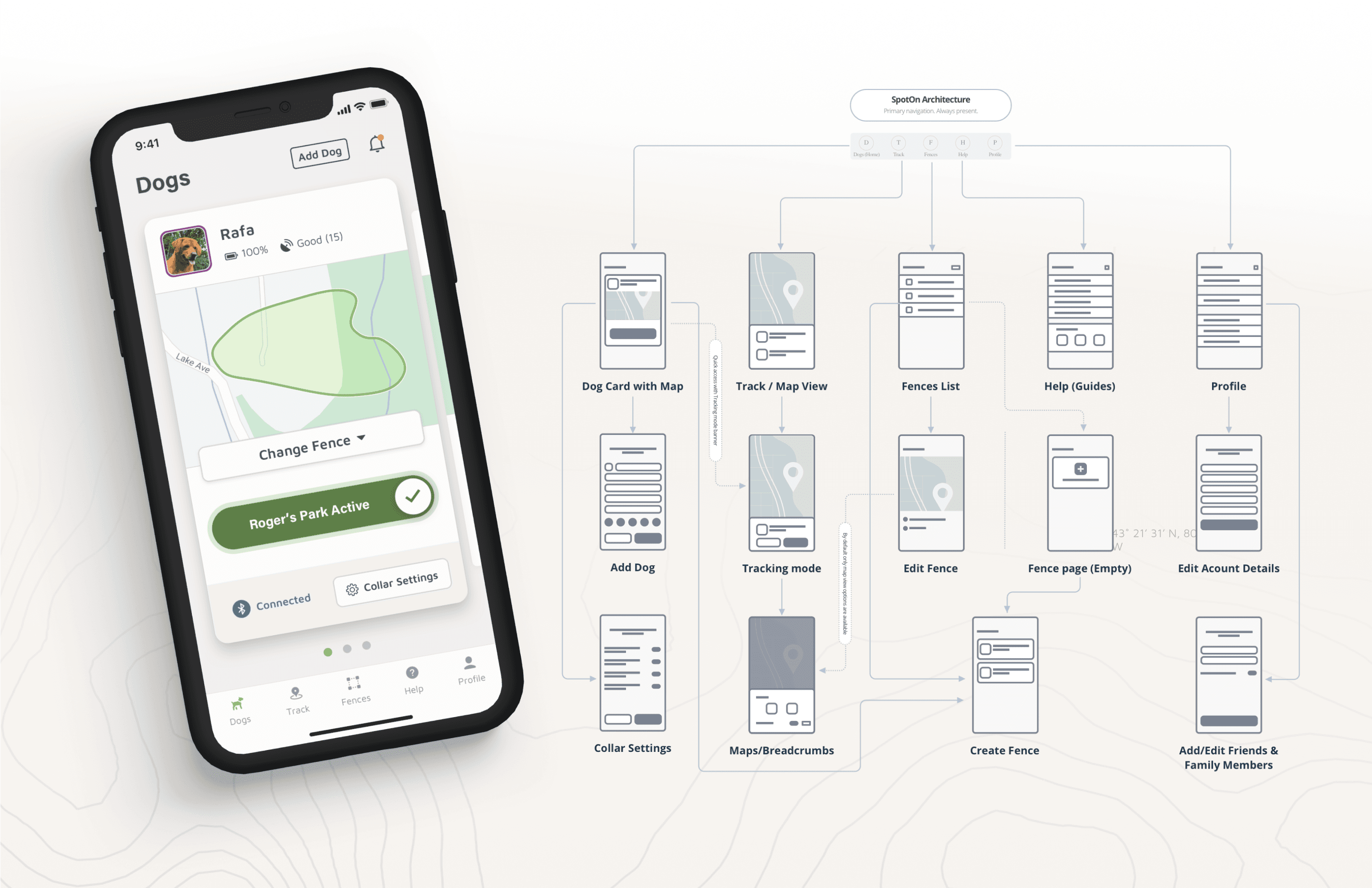
The defining decision I made early was to put the app, not the collar, at the center of the experience — moving control and settings off the hardware and into software. That kept the collar simple and let the product evolve without new hardware, but it meant the app had to carry the full weight of the experience. So I owned the calls that followed: which capabilities to surface and which to keep out of the way, how to represent real-time states the user can't physically see — is the collar connected, is the dog inside the fence — and how to keep the experience calm and trustworthy while the system underneath stayed complex.
key decision 2/4.
Fence Creation: From Hours to Minutes
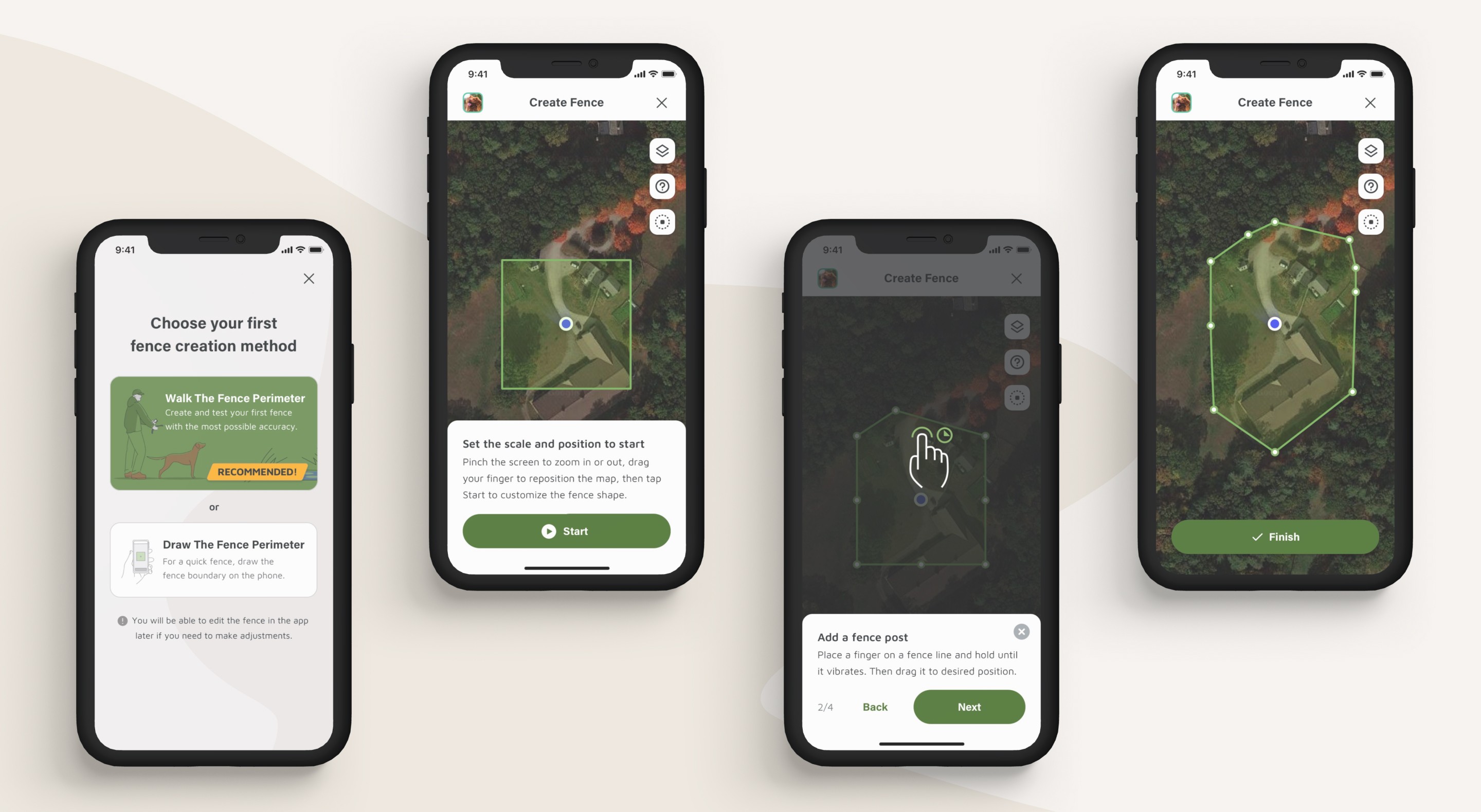
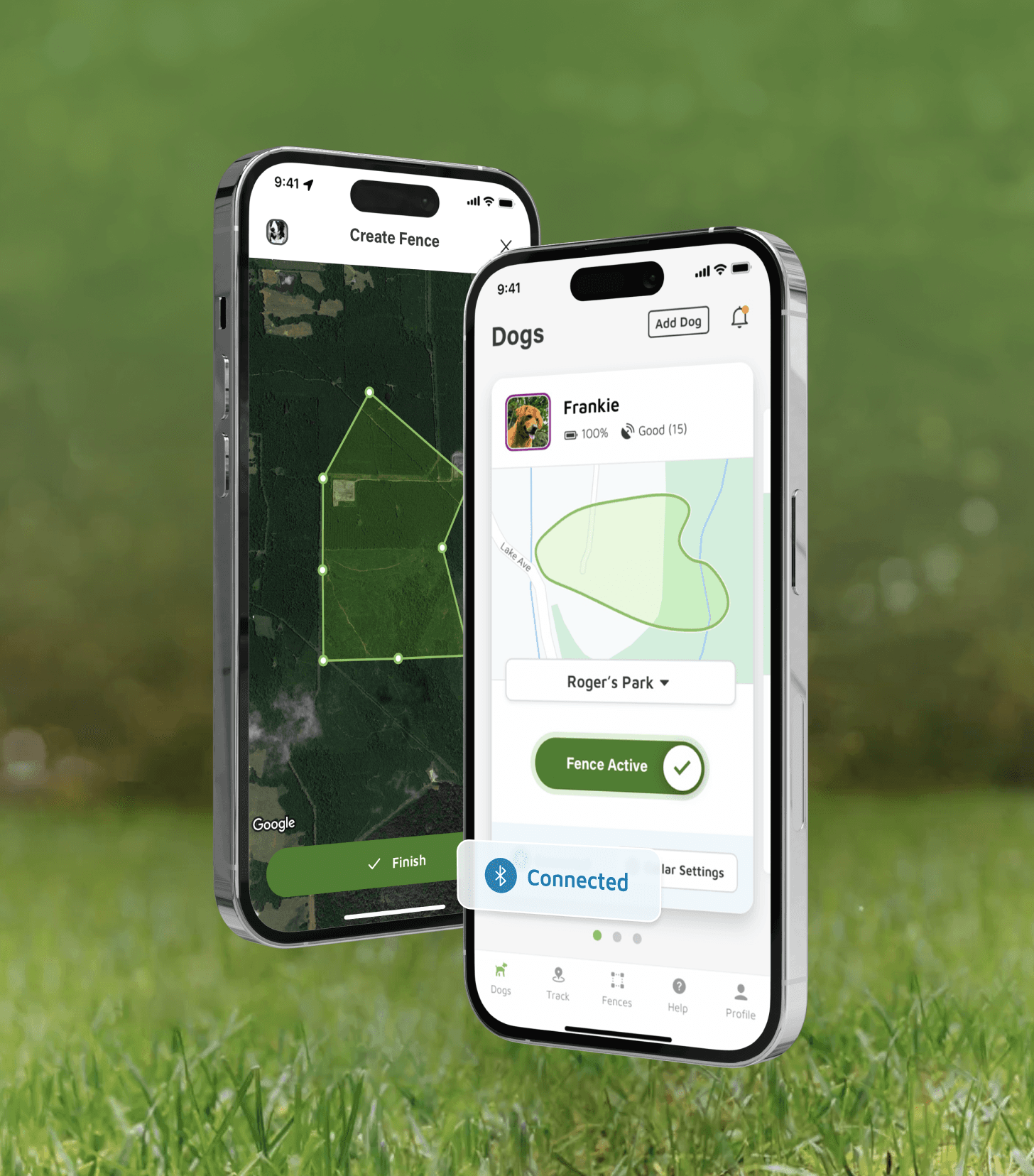
To make fence creation possible without walking the property, I designed an in-app drawing feature — owners can map a fence from any location, with no collar connection required.
Fence creation is how owners keep their pets safe: a virtual boundary marks the zone where a dog can play unleashed, with no need to be physically watched. Through training with the collar's vibration and sound cues, dogs learn the boundaries they can't cross.
Based on our research, I first designed a seamless, step-by-step on-field creation flow: the owner connects the collar to their phone and walks the desired perimeter, then follows guided steps to test the boundary and train the dog to stay inside it.
Rolling this out did double duty — it let the team test and improve the collar's data quality, and it gave us real insight into how owners and dogs behaved, where they struggled, and what they expected. Two patterns stood out: thanks to the GPS system's precision, many users turned out to be in rural areas with huge properties that were impractical to walk; and some wanted to block off specific areas inside the fence.
That drove a second iteration. I designed an in-app fence-drawing feature that lets owners create a fence from any location — no walking the property, no collar connection required. For owners with large properties, that cut fence setup from a long walk to a couple of minutes. I also added zones inside the containment: a Home Zone, a safe area where the dog doesn't need monitoring, and a Keep-Out Zone, where the dog isn't allowed to go.
With clear guidance and an intuitive gesture-based flow, the new functionality raised the usability of fence creation and put SpotOn at the top of its competition.
key decision 3/4.
Real-Time Tracking You Can Trust
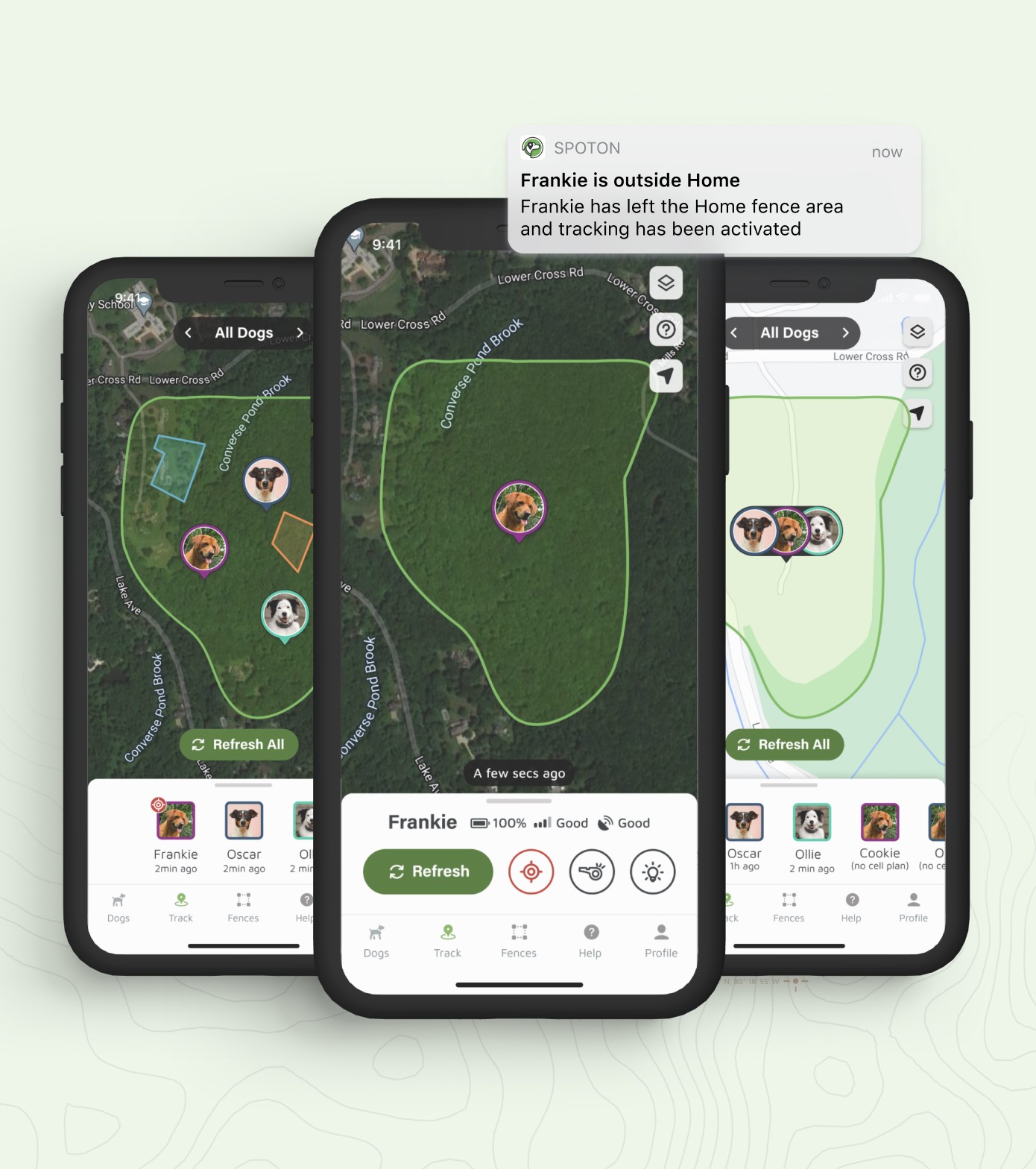
For a tracking product, trust is the feature. So I designed an experience that feels calm and dependable precisely because all that connectivity complexity stays invisible.
Once a fence exists and a dog is trained, the app's job is quiet reassurance: show where the dog is, and speak up only when it matters. I designed the tracking experience around that — a live map for everyday peace of mind, escalating alerts as a dog nears or crosses a boundary, and an automatic tracking mode with breadcrumb trails to follow and find a dog that gets out. Owners can manage multiple dogs, adjust monitoring and warning levels, and create permanent or quick temporary fences as needed.
Behind that simplicity is a hard reliability problem: the collar works across vast rural land and under thick forest, where cellular and satellite coverage drop and Bluetooth range is limited. The system keeps a connection alive across all three channels at once — so if one drops, the others keep updating, and the user never sees the seams.
key decision 4/4.
Guiding Users Through the Complexity
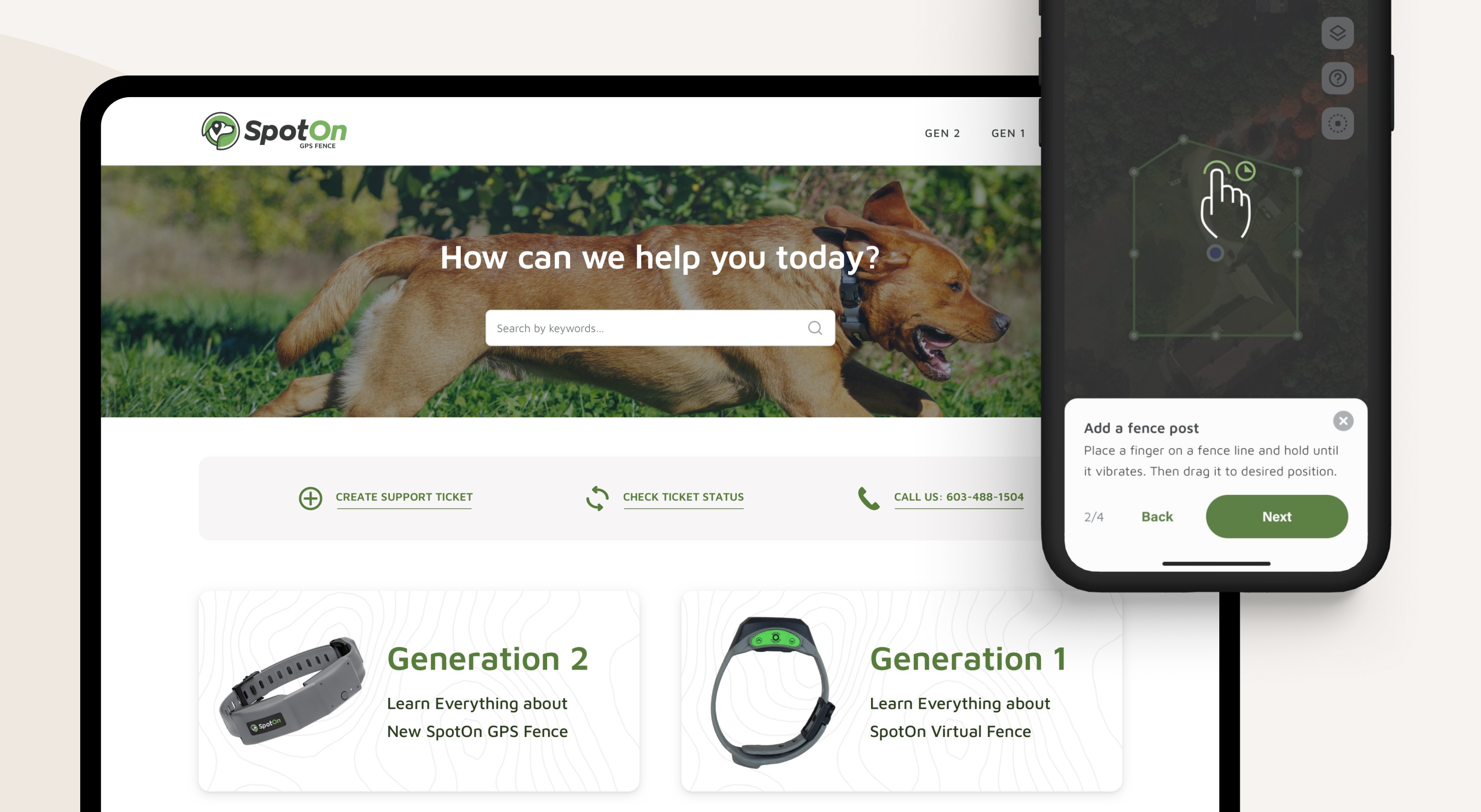
SpotOn operates at the edge of the app, the backend, and the collar — with complex processes running constantly to keep all three in sync in real time. I'd done a lot of UX work to hide that complexity and keep the experience seamless, but the sheer variety of actions the app supports still called for a strong, consistent educational layer.
So I designed a dynamic, context-based network of guides — using visual cues and clear, plain language — that help users learn to use the app efficiently, in the moment as they go. Alongside it, I built a dedicated help platform with comprehensive information, tutorials, and articles, plus the option to chat with customer support — all accessible directly from the mobile app or the desktop browser.
beyond the app.
Website & Management Tool Development
The consumer app was one of several surfaces I designed for SpotOn's ecosystem.
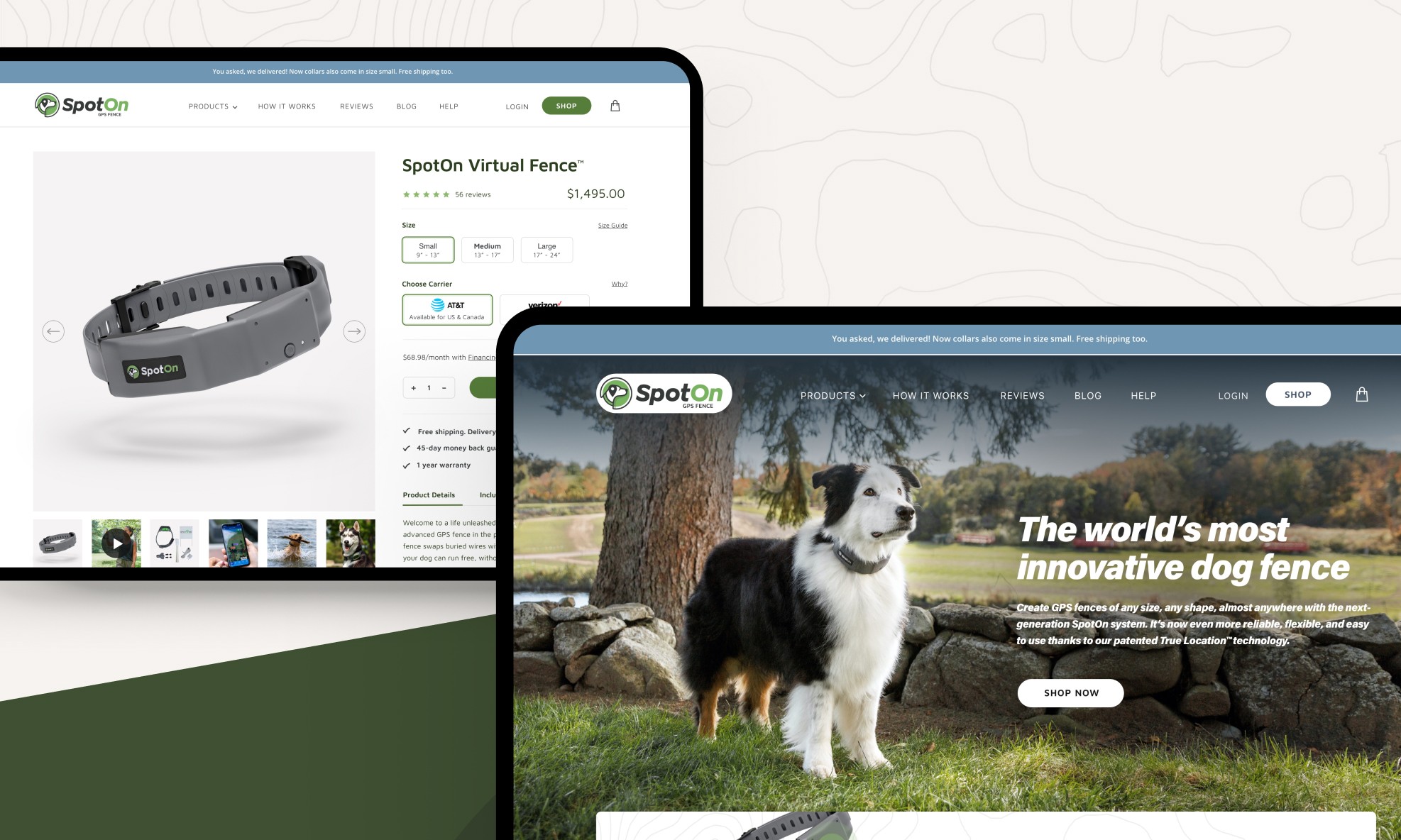
SpotOn didn't have a real website yet, so I designed one from the ground up — defining the concept and owning the full UI/UX to showcase the collar and app and make their value clear to customers. (A dedicated SpotOn web case study is coming soon.)
I also designed SpotOn's internal management tool — a single place for the team to manage collars and user accounts, monitor activity, support customers, and track subscriptions. It gave the support team one connected system to run service operations from, instead of juggling disconnected tools.
result.
We took the best of SpotOn's groundbreaking technology and spent two years rebuilding the Gen-2 experience from the ground up — the mobile app, the backend platform, and the supporting website. Since launching in April 2022, SpotOn has been used by tens of thousands of dog owners across the US and Canada, with consistently high ratings and industry-leading NPS.
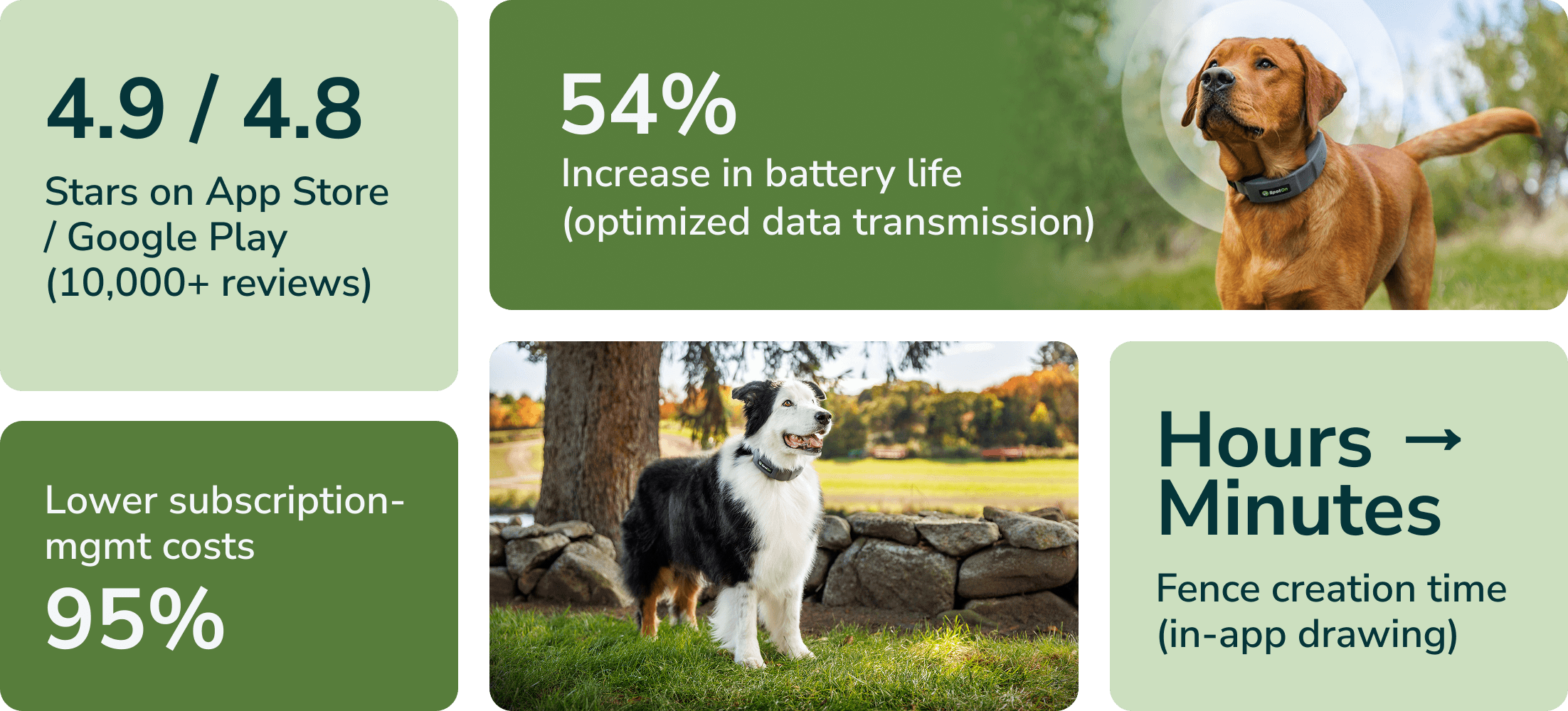
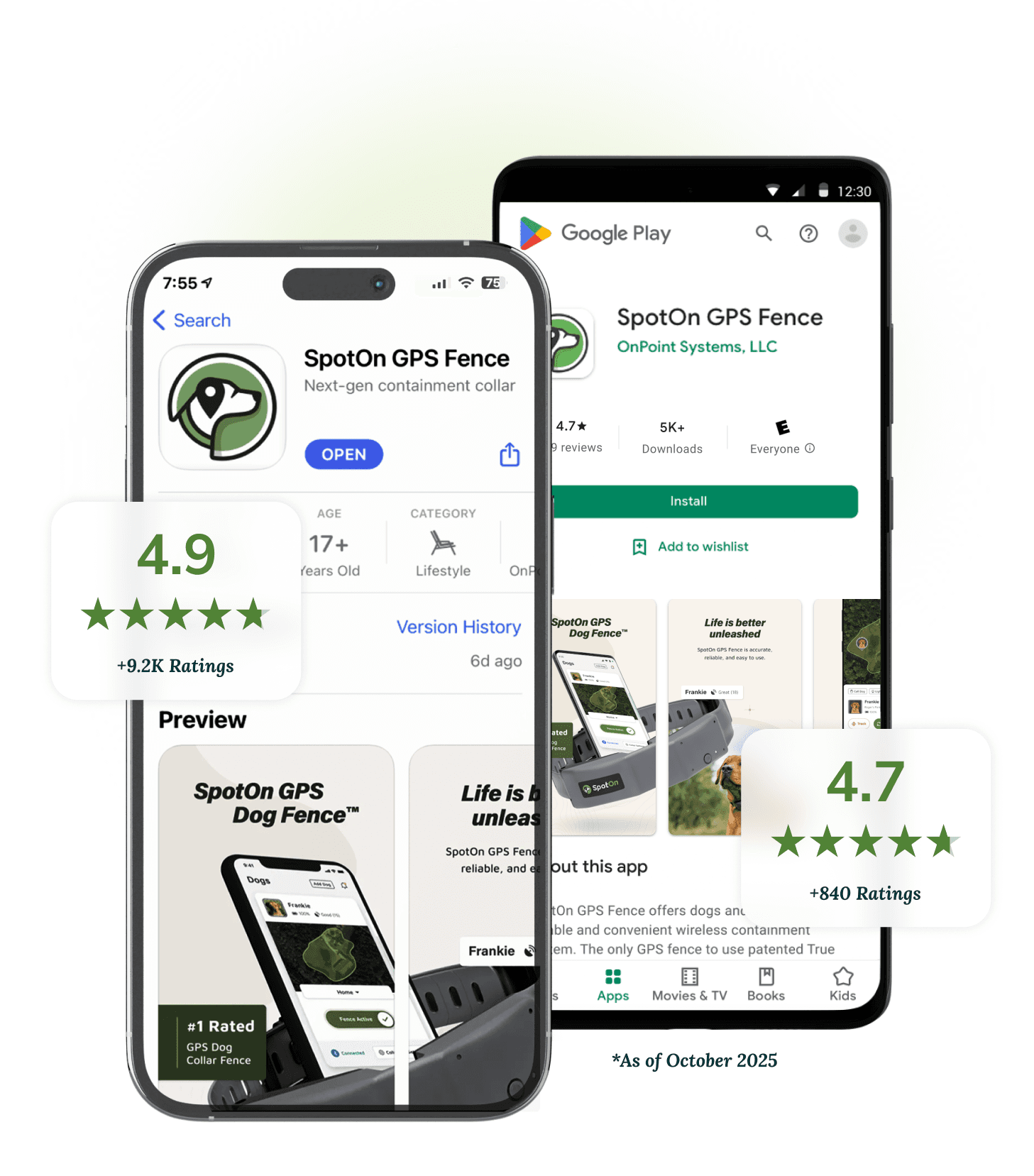
The app launched to 4.9★ on the App Store and 4.8★ on Google Play — now 10,000+ reviews.
In-app fence drawing cut fence creation from hours to minutes — the change that got users to value fastest.
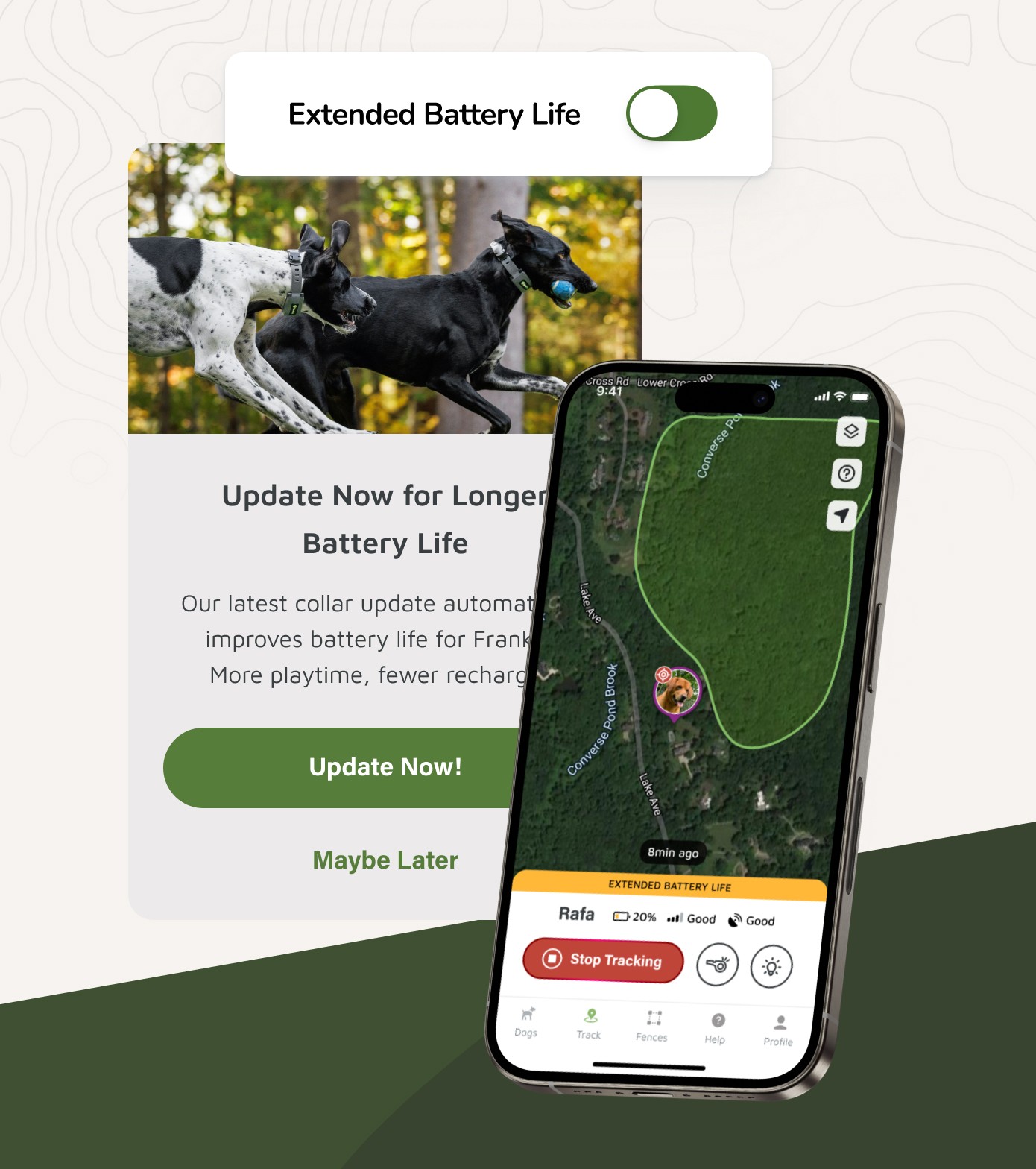
Optimized data transmission extended collar battery life by 54%, with reliable fence detection maintained.
Behind the scenes, the broader team's work cut subscription-management costs by 95% and manufacturing testing time by 50%, and earned a Silver Stevie Award for the custom Customer Data Platform.
testimonial.
In our partnership with Whitespectre, each team's expertise perfectly complement the other. This all results in a customer-focused mindset throughout the team that leads us to make the right choices in product, design, and engineering. It's an excellent relationship, and I'm really happy with it.

Ken Bazydola
Head of Product, SpotOn